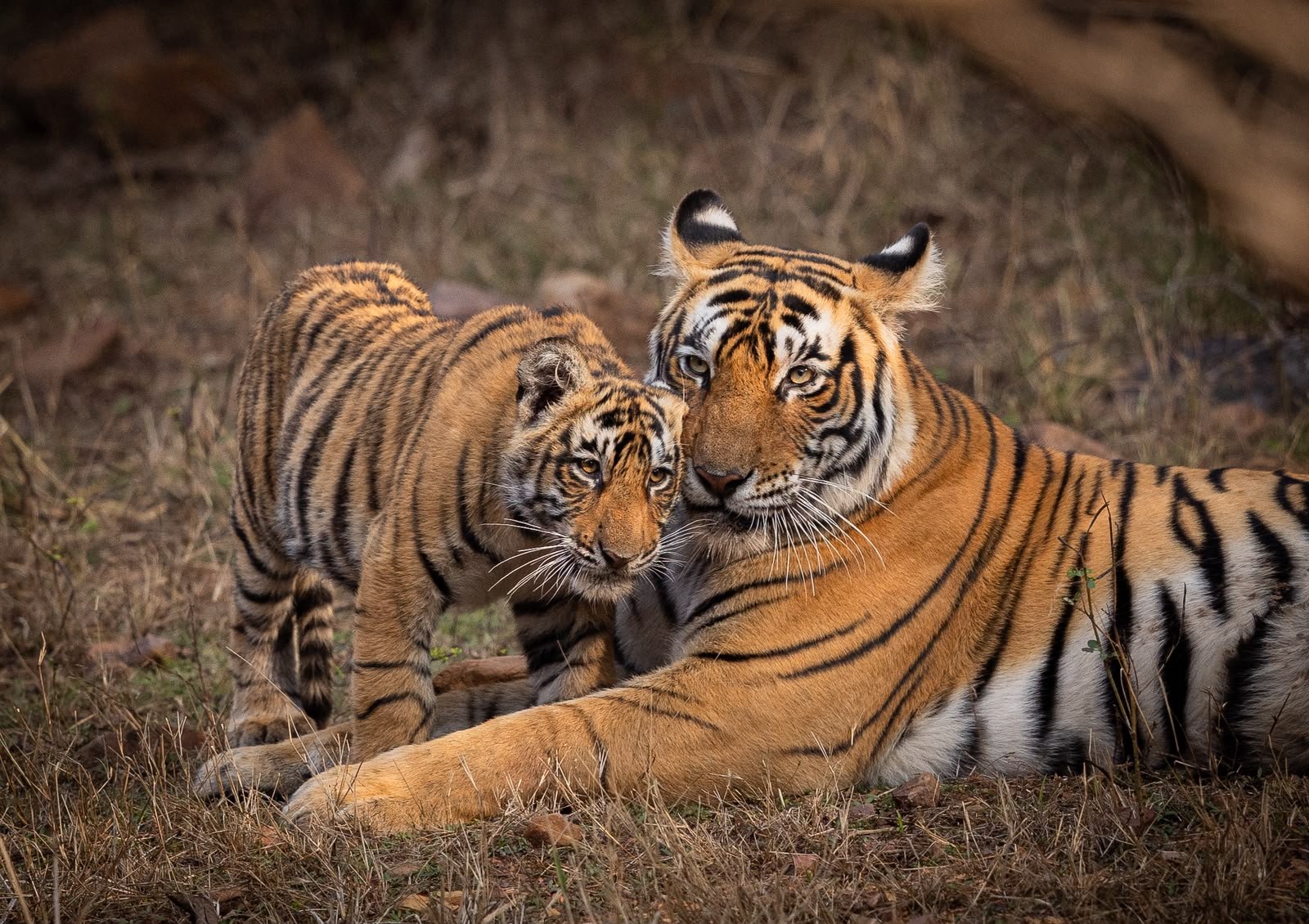
New Delhi: International Tiger Day, observed every year on July 29, is a global reminder of the urgent need to protect one of the planet’s most iconic and endangered species.
The day highlights the importance of conserving wild tigers, protecting their habitats, and ensuring that future generations inherit healthy forests and thriving ecosystems.
The theme for International Tiger Day 2026 is “Securing the Future of Tigers with Indigenous Peoples and Local Communities at the Heart”
The theme highlights the important role of Indigenous Peoples and local communities in protecting tiger habitats and supporting long-term conservation efforts.
Communities living near forests often have generations of knowledge about local ecosystems, wildlife behaviour and sustainable practices. Their participation is considered essential for protecting tiger landscapes while ensuring the well-being of people who share these environments.
For India, International Tiger Day is more than an annual observance, it is a celebration of one of the world’s greatest conservation success stories.
Today, India is home to nearly 70% of the world’s wild tiger population, making it the global leader in tiger conservation. The country’s achievements reflect decades of science-based conservation, strong political commitment, effective wildlife laws, and the active participation of local communities.
India launched Project Tiger in 1973 with only nine tiger reserves covering about 18,000 square kilometres. The programme aimed to reverse the alarming decline in tiger numbers through habitat protection, anti-poaching measures, scientific monitoring, and community participation.
As per the 5th cycle of the All India Tiger Estimation 2022 (usually done in cycles of four years) summary report, India has a minimum of 3,167 tigers and is now home to more than 70% of the world’s wild tiger population.
Further data analysis using the latest statistical models for camera-trapped and non-camera-trapped tiger presence areas estimates the upper limit of the tiger population at 3,925, with an average number of 3,682 tigers, reflecting a commendable annual growth rate of 6.1%.
This remarkable conservation feat has been achieved due to the pioneering initiatives undertaken by the National Tiger Conservation Authority, Government of India, in collaboration with State Governments
History of International Tiger Day:- International Tiger Day was established in 2010 during the Saint Petersburg Tiger Summit held in Russia. Leaders from the 13 tiger-range countries came together after recognizing that the global wild tiger population had fallen to an alarming around 3,200 individuals due to habitat destruction, poaching, illegal wildlife trade, and human encroachment.
The participating countries adopted the ambitious TX2 Goal, committing to double the global wild tiger population by 2022 through coordinated conservation efforts, stronger law enforcement, habitat restoration, and international cooperation.
The 13 tiger-range countries are: Bangladesh, Bhutan, Cambodia, China, India, Indonesia, Laos, Malaysia, Myanmar, Nepal, Russia, Thailand and Vietnam.
Why Tigers Matter:-Tigers are apex predators, occupying the highest position in the food chain. Their presence helps maintain ecological balance by regulating populations of herbivores such as deer and wild boar.
Healthy tiger populations indicate healthy forests, which provide clean air, freshwater, carbon storage, and livelihoods for millions of people. Conserving tiger habitats also protects thousands of other plant and animal species that share the same ecosystems.
India’s success demonstrates that conservation can deliver measurable results when backed by strong policies, scientific research, dedicated forest staff, and community participation. As the country continues to strengthen its protected area network and wildlife corridors, it also serves as a model for tiger conservation across the world.
On International Tiger Day, the message is clear: protecting tigers means protecting forests, biodiversity, water resources, and the ecological foundations that support human well-being. India’s conservation journey shows that with sustained commitment and collective action, it is possible to secure a future where both wildlife and people can thrive together.