

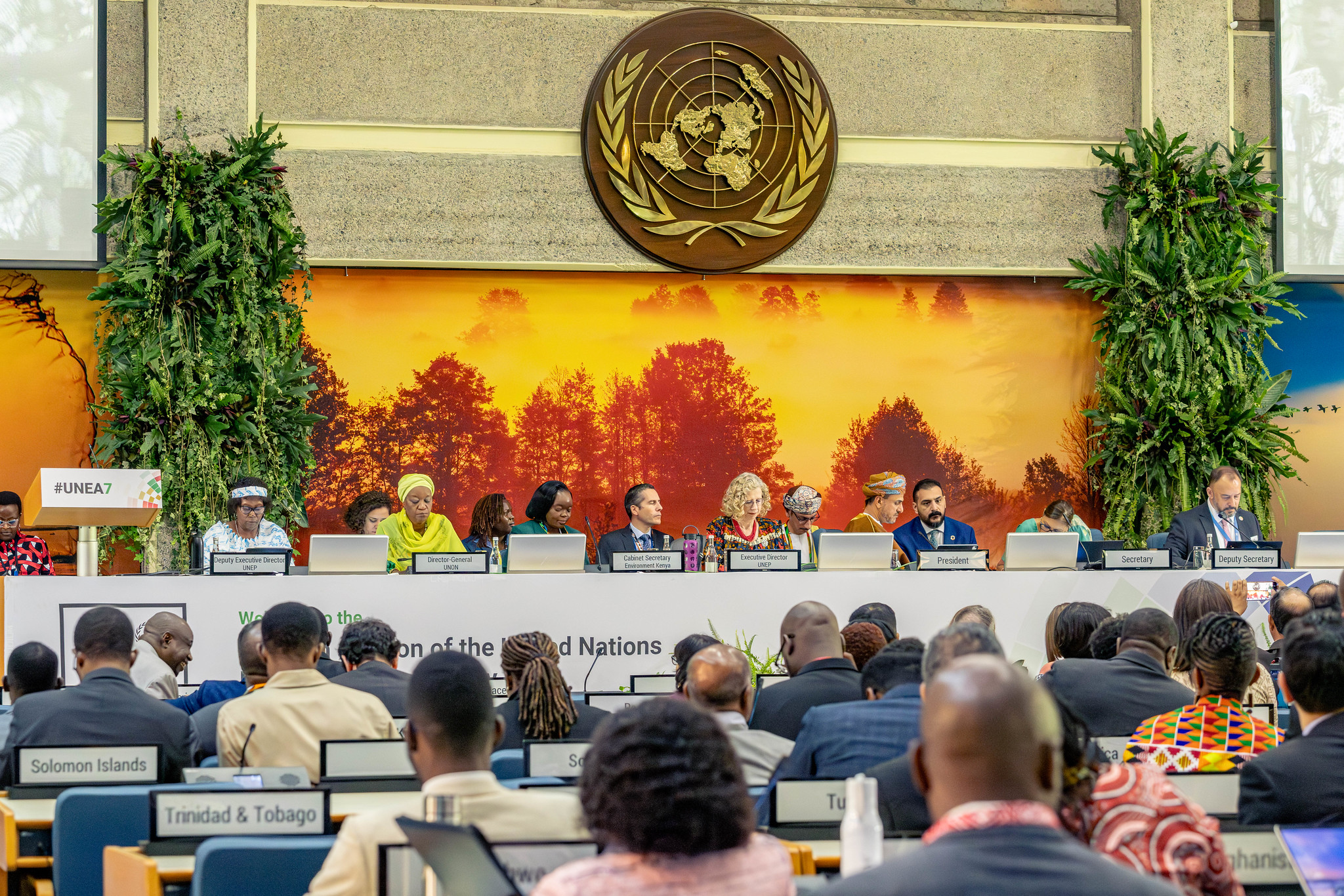
New Delhi/Nairobi: India will put forward its flagship environmental initiatives on the global stage as Minister of State for Environment Kirti Vardhan Singh departs for Nairobi to participate in the seventh session of the United Nations Environment Assembly (UNEA-7), the world’s highest-level decision-making forum on environmental matters.
The Assembly, which convenes 193 member states every two years, will deliberate on critical issues including climate change, biodiversity loss and pollution.
Ahead of the meeting, India underscored the urgency for collective global action, noting that the world is confronted with “serious crises” that demand unified and decisive responses.
The Indian delegation is expected to showcase progress under several national missions that have gained international recognition.
Guided by the leadership of Prime Minister Narendra Modi, India has advanced multiple large-scale environmental programmes such as the Namami Gange river rejuvenation initiative, Mission LiFE (Lifestyle for Environment), the mass tree-planting campaign Ek Ped Maa Ke Naam, and the Swachh Bharat Mission.
These initiatives demonstrate India’s commitment to sustainable development and behavioural change at both individual and community levels.
Emphasising that environmental protection “is not a choice but essential for our very existence,” India will call on global partners to strengthen cooperation and adopt sustainable lifestyles, aligning with the Mission LiFE approach. The country hopes that UNEA-7 will accelerate collective efforts to build a climate-resilient and environmentally secure future.
The seventh session of the United Nations Environment Assembly (UNEA-7) will take place from 8 to 12 December 2025 at the United Nations Environment Programme (UNEP) headquarters in Nairobi, Kenya, on the theme ” Advancing Sustainable solution for a resilient planet”
In a statement, Inger Andersen, Executive Director of the United Nations Environment Programme said this year, this Assembly must draw on its history of unity to again deliver sustainable solutions for a resilient planet. Solutions that back long-term economic growth, poverty reduction, social cohesion, improved human and planetary health and more.
“This Assembly must dig deeper than ever, because environmental challenges are accelerating. The rise in average global temperatures will likely exceed 1.5°C within the next decade, bringing escalating consequences with every fraction of a degree….adding that ecosystems are disappearing and land is degrading. Dust storms are intensifying. Toxins continue to pollute our air, water and land.





Tôi thấy cricify web có khá nhiều trò chơi thú vị nên trải nghiệm giải trí mỗi ngày không bị nhàm chán. TONY08-03