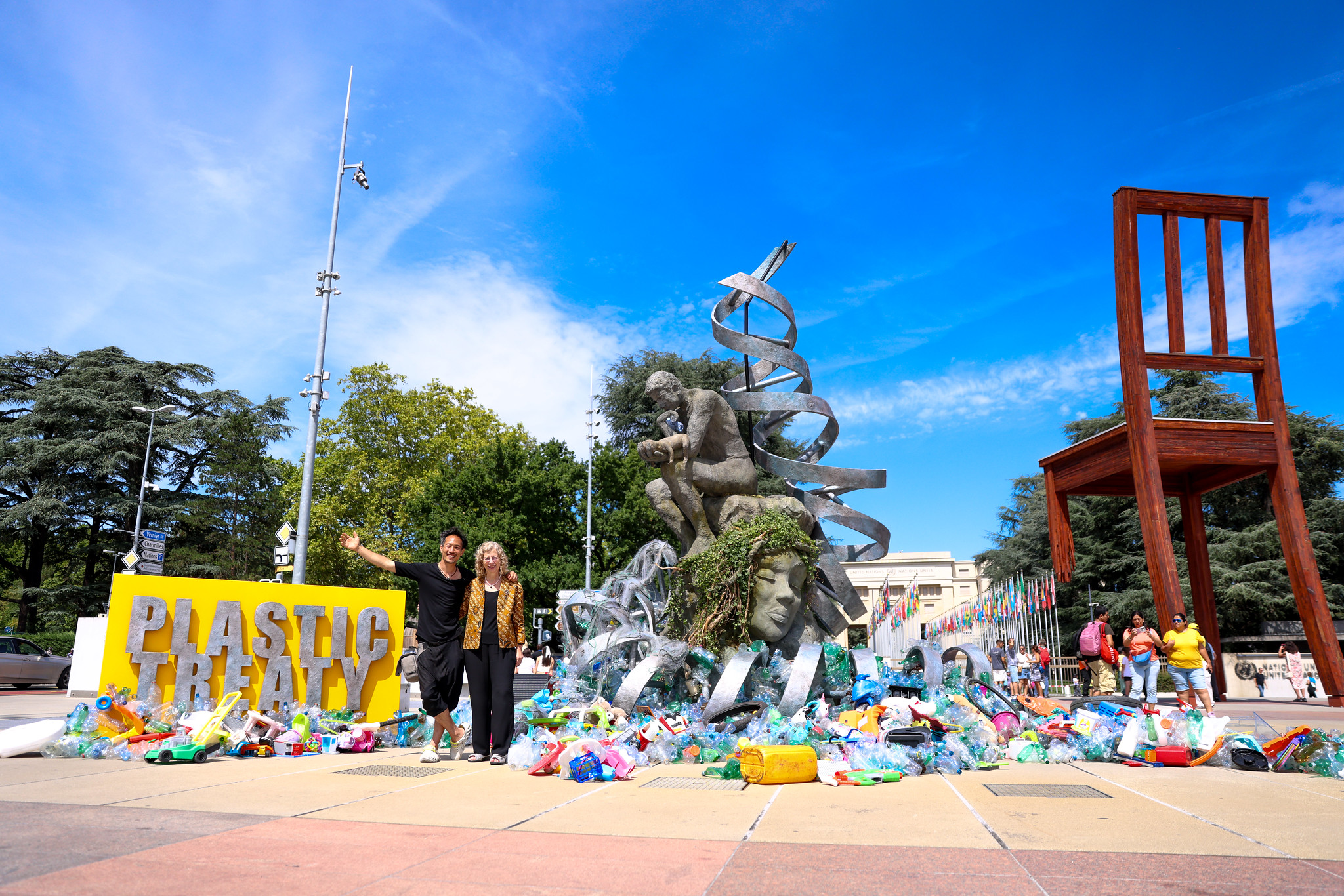
Treaty, once adopted, is expected to become the most significant global environmental agreement since the Paris Climate Accord.
Geneva: Ten days of negotiations under the Intergovernmental Negotiating Committee (INC) on a global plastics treaty concluded early on Friday without consensus on the proposed “legally binding instrument to combat plastic pollution”, including in the marine environment.
“The meeting adjourned with a clearly expressed desire by Member States to continue the process, recognizing the significant difference of views between states” UNEP said in a statement.
The talks, held under the mandate of the United Nations Environment Assembly Resolution 5/14, aimed to finalize a framework addressing the full lifecycle of plastics — from production to disposal — but disagreements over ambition levels, funding mechanisms, and enforcement provisions halted progress.
“This has been a hard-fought 10 days against the backdrop of geopolitical complexities, economic challenges, and multilateral strains. However, one thing remains clear: despite these complexities, all countries clearly want to remain at the table” said Inger Andersen, Executive Director of the UN Environment Programme (UNEP).
“While we did not land the treaty text we hoped for, we at UNEP will continue the work against plastic pollution – pollution that is in our groundwater, in our soil, in our rivers, in our oceans and yes, in our bodies” she added.
“We did not get where we wanted, but people want a deal. This work will not stop, because plastic pollution will not stop.”
— UN Environment Programme (@UNEP) August 15, 2025
UNEP Executive Director @andersen_inger at the close of the second part of #INC5 in Geneva.
Watch the full media stakeout: https://t.co/rpSs6tao6T… pic.twitter.com/Ik1OGpIh0Y
Delegates and observers said that while significant ground was covered on measures to reduce plastic production, improve recycling systems, and protect ocean ecosystems, the Committee could not reconcile divergent national positions.
The INC confirmed that negotiations will reconvene at a future date to be announced. Environmental groups warn that further delays could undermine global efforts to curb the plastic crisis, which threatens biodiversity, human health, and climate stability.
The treaty, once adopted, is expected to become the most significant global environmental agreement since the Paris Climate Accord.
“Failing to reach the goal we set for ourselves may bring sadness, even frustration. Yet it should not lead to discouragement. On the contrary, it should spur us to regain our energy, renew our commitments, and unite our aspirations,” said INC Chair Ambassador Luis Vayas Valdivieso.
“It has not happened yet in Geneva, but I have no doubt that the day will come when the international community will unite its will and join hands to protect our environment and safeguard the health of our people” he added.