

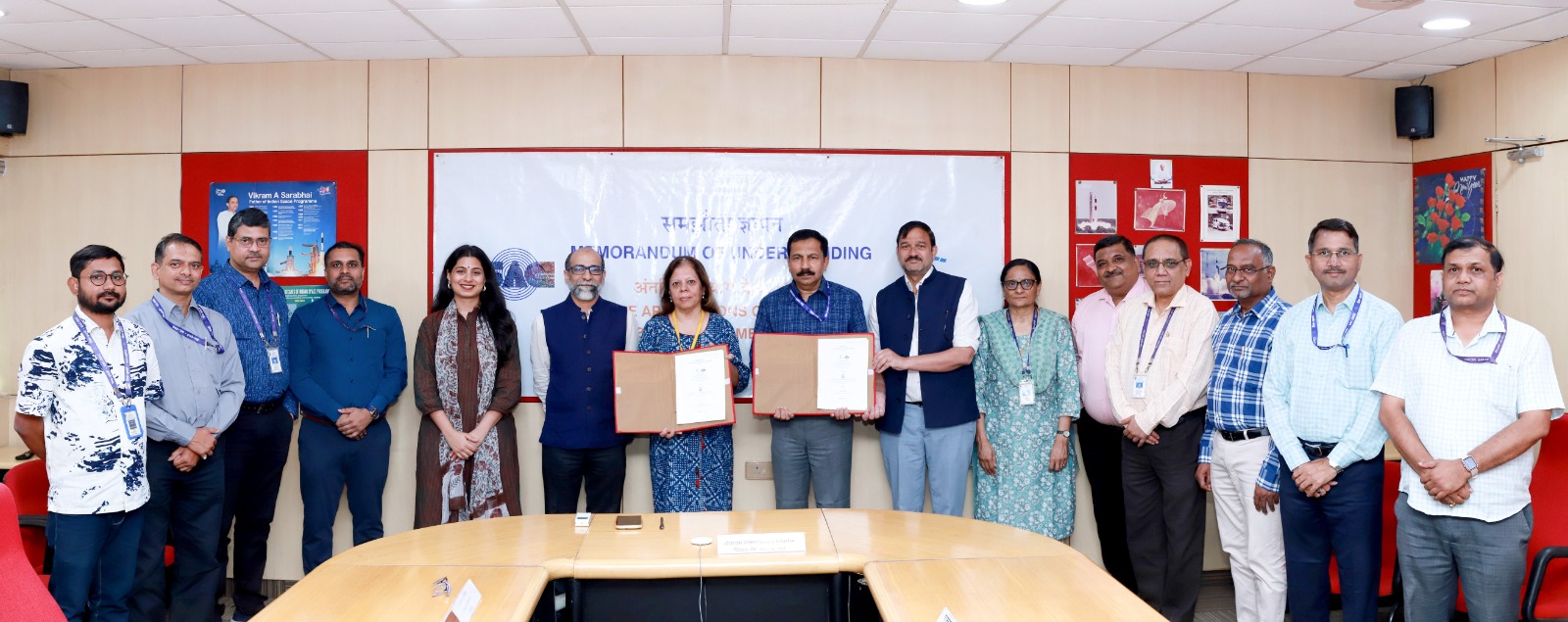
New Delhi: In a significant move to strengthen sustainable land management in India, the Space Applications Centre (SAC) of the Indian Space Research Organisation has signed a Memorandum of Understanding (MoU) with the Ashoka Trust for Research in Ecology and the Environment.
The collaboration aims to enhance research, data sharing, and knowledge exchange, with a strong focus on mapping India’s grasslands and other open natural ecosystems. These landscapes—often overlooked in policy frameworks—play a crucial ecological role and are vital for biodiversity, climate resilience, and rural livelihoods.
Under the partnership, the two institutions will work together to assess the impact of restoration efforts on degraded lands and develop improved methodologies to estimate both above- and below-ground carbon. By combining SAC’s expertise in large-scale geospatial mapping with ATREE’s interdisciplinary ecological research and field-based insights, the initiative is expected to generate robust, policy-relevant data.
The joint effort will support decision-making at both national and state levels in areas such as land use planning, climate action, and conservation strategies. It will also help establish scalable and standardised approaches for identifying and monitoring ecosystems including grasslands, savannas, and deserts.
Officials noted that the MoU brings together complementary strengths in space-based observation and ecological science, marking a key step in improving how India understands and manages its diverse landscapes. The initiative will also evolve through collaboration with a broader network of researchers, practitioners, and institutions.
Importantly, the partnership aligns with India’s commitment to achieving Land Degradation Neutrality by 2030 and advancing multiple Sustainable Development Goals.
By formalising this collaboration, SAC-ISRO and ATREE aim to integrate ecological sustainability with economic resilience, ensuring that India’s open natural ecosystems are recognised as strategic assets for the country’s future.


https://shorturl.fm/yRDqK
https://shorturl.fm/Y78eW