Bonn, Germany: The UN’s top climate chief Simon Stiell has called on countries to accelerate implementation of existing climate commitments, warning that continued reliance on fossil fuels is worsening economic instability and intensifying climate risks for vulnerable populations.
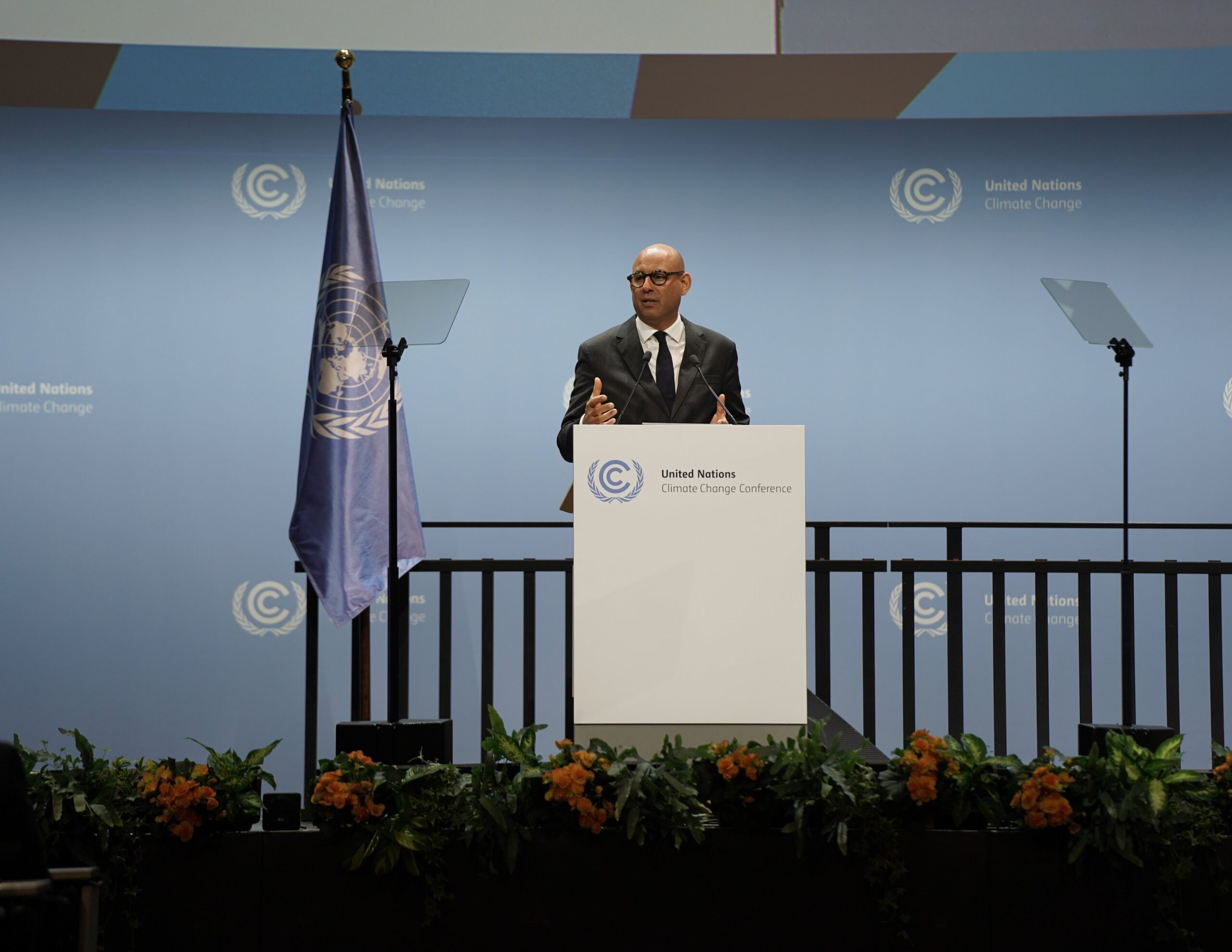
Speaking at the opening of the UN June Climate Meetings in Bonn, UNFCCC Executive Secretary Simon Stiell said governments must move “further, faster” to deliver on pledges made under the Paris Agreement. The annual Bonn talks serve as a key mid-year step toward the next major UN climate summit, COP31, set to take place in Antalya, Türkiye in November.
“Tackling the global climate crisis is the hardest, but most important thing humanity has ever tried to do together,” Stiell said, adding that global economies depend on successful climate action and there is “no choice” but to persist.
The Bonn meetings take place annually in the lead-up to COP conferences, the latest of which was held in Belém, Brazil, last November.
Over the next two weeks, delegates will advance technical and political work as well as review progress on existing commitments.
The mid-year negotiations are being held against a backdrop of intensifying climate impacts and mounting pressures on countries linked to energy security, food systems and economic uncertainty.
Focus will be on issues such as adaptation, finance, the just transition to renewable energy, agriculture and food security, and follow-up to the first global stoktake towards achieving the Paris Agreement on Climate change concluded at COP28 in Dubai in December 2023.
The negotiations come amid rising global temperatures, extreme weather events, and growing concerns over energy and food security. Delegates in Bonn will spend the next two weeks working on technical and political issues, including adaptation, climate finance, agriculture, and the follow-up to the first Global Stocktake under the Paris Agreement.
Stiell acknowledged that while progress is underway, it remains insufficient. “We are not where we need to be. But we are somewhere we have never been before,” he said, urging countries not to reopen settled negotiations but instead focus on implementation.
He also linked fossil fuel dependence to broader economic pressures, arguing it contributes to inflation, energy insecurity, and increased exposure to climate disasters. “Continuing our fossil fuel dependency means continuing to import inflation and economic instability,” he warned.
Key priorities highlighted for the Bonn session include advancing the Global Goal on Adaptation, developing indicators for resilience tracking, strengthening the just transition framework, and scaling up climate finance mechanisms such as support for adaptation funds.
The UN climate chief also pointed to the need to bring climate action closer to real-world economies, involving governments, businesses, cities, investors, and civil society through broader cooperative initiatives.
While acknowledging concerns from countries about bureaucracy and financial access within the UN climate system, Stiell said reforms were underway to improve efficiency and reduce reporting burdens. “The Secretariat will always be there to advise and support you,” he said, “but ultimately, it’s your process, and your decisions to make.”
Delegates are expected to use the Bonn meetings to push forward work on emissions reduction, including methane control, waste reduction, resilient cities, and food system adaptation, as pressure mounts to keep global warming within the 1.5°C target.