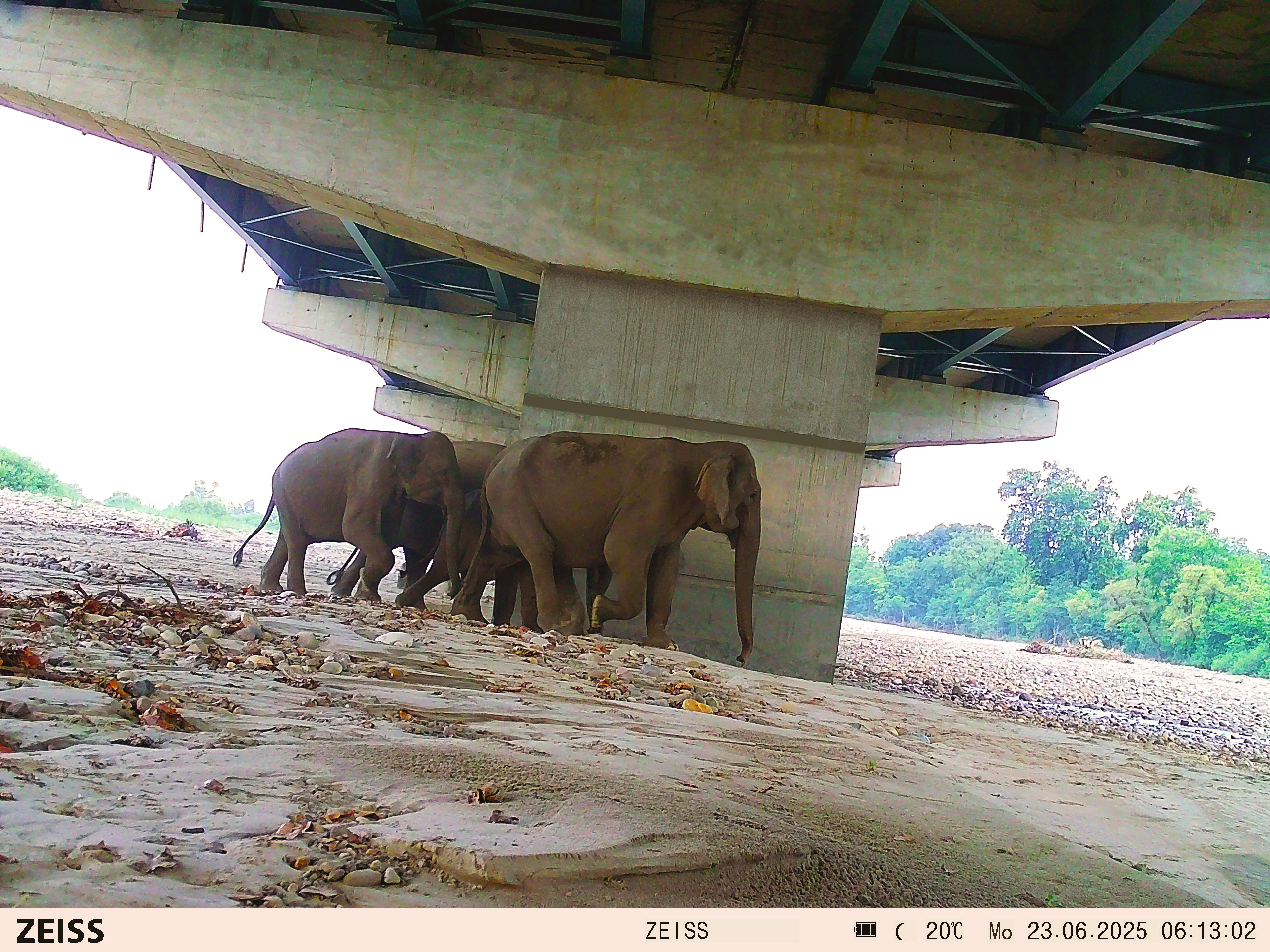
New Delhi: Achieving a major milestone in sustainable infrastructure, the National Highways Authority of India (NHAI), in collaboration with the Wildlife Institute of India, has released a report titled “Landscapes Reconnected”, offering the first empirical evidence of wildlife successfully using animal underpasses along the Delhi–Dehradun Economic Corridor.
The study highlights how large-scale highway development can coexist with ecological preservation, particularly in environmentally sensitive regions like the Shivalik landscape.
Conducted along an 18-km stretch between Ganeshpur and Asharodi, the research assessed wildlife movement patterns, underpass usage, and the effectiveness of mitigation structures. The forested corridor is home to several endangered species, including Bengal Tiger, Asian Elephant, Great Hornbill, and King Cobra.
A key engineering feature of the project is a 10.97-km-long network of animal underpasses within a 20-km stretch, including one of Asia’s largest wildlife elevated corridors, standing 6–7 metres high to accommodate even the largest mammals.
The study area was divided into three zones spanning riverbeds, hilly terrain, and dense Sal forests. Over a 40-day monitoring period, researchers deployed 150 camera traps and 29 acoustic recorders, capturing over 111,000 images. Of these, more than 40,000 images documented 18 distinct wild species using the underpasses.
Among the most frequently recorded species was the Golden Jackal, followed by herbivores such as the Nilgai, Sambar Deer, and Chital. Smaller mammals like the Indian Hare were also regularly observed. Notably, elephants were recorded using the corridors 60 times, demonstrating the effectiveness of the infrastructure in supporting large animal movement.
The report identifies noise management as a crucial factor influencing wildlife behaviour. While adaptable species such as jackals and wild boars tolerated traffic noise, more sensitive animals like elephants and deer preferred quieter sections of the underpasses. Researchers recommend targeted sound barriers to further improve usability for such species.
Importantly, the corridor has significantly reduced the risk of human–wildlife conflict and prevented habitat fragmentation in the region. The findings reinforce that well-planned infrastructure, integrating underpasses and elevated corridors, can maintain ecological connectivity while enabling economic development.
NHAI officials said the project sets a benchmark for future highway construction, reaffirming their commitment to environmentally sustainable and data-driven infrastructure development.