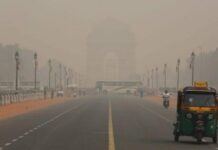
New Delhi: Vehicular emissions not stubble burning are the biggest contributors to Delhi’s toxic winter air, a new analysis by the Centre for Science and Environment (CSE) has revealed, challenging widely held public perceptions about the capital’s pollution sources.
According to CSE, traffic-related emissions consistently remain the single-largest source of particulate pollution in the city during the winter months, often overshadowing the episodic spikes caused by crop-residue burning in neighbouring states.
The think tank noted that while stubble fires do worsen air quality over short periods, their impact is limited compared to the continuous, round-the-clock emissions from vehicles crisscrossing the National Capital Region.
The study highlights that Delhi’s rapidly growing vehicular fleet, dependence on private transport, and high diesel consumption have intensified the pollution load.
Congestion, idling at traffic junctions, and inadequate public transport uptake further compound the problem.
CSE emphasised that the capital cannot rely solely on controlling farm fires to improve winter air quality. Instead, tackling vehicular pollution through stricter emissions enforcement, expansion of public transport, improved last-mile connectivity, and disincentives for private vehicle use must be prioritised.
The findings come at a time when Delhi’s air quality index (AQI) has repeatedly plunged into the ‘severe’ category this season, prompting emergency measures under the Graded Response Action Plan (GRAP).
Environmental experts say the latest analysis underscores the need for year-round, systemic interventions instead of reactive responses to seasonal pollution spikes.