“India’s circular economy has the potential to generate a market value of more than USD 2 trillion and create close to 10 million jobs by 2050“.
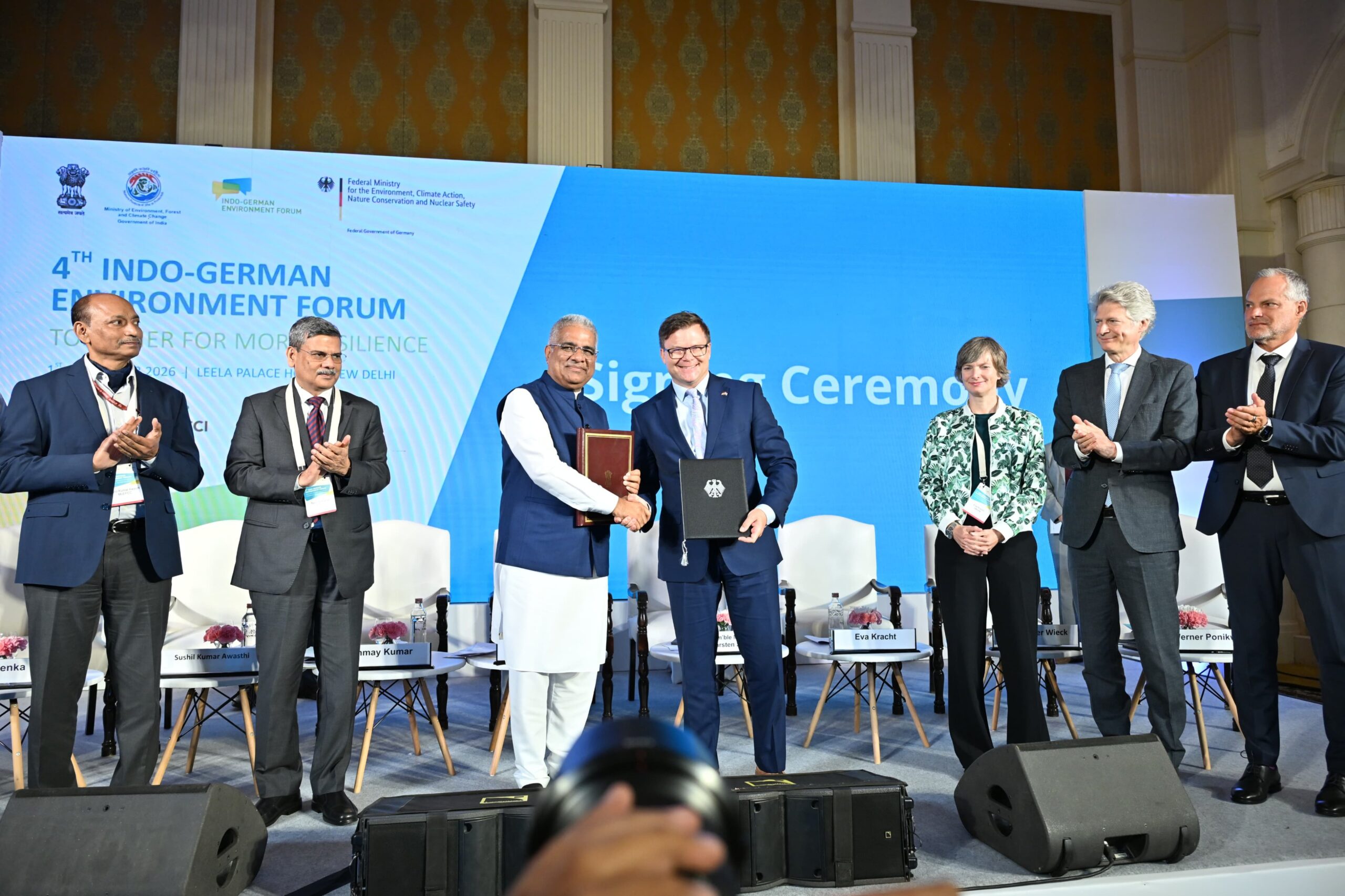
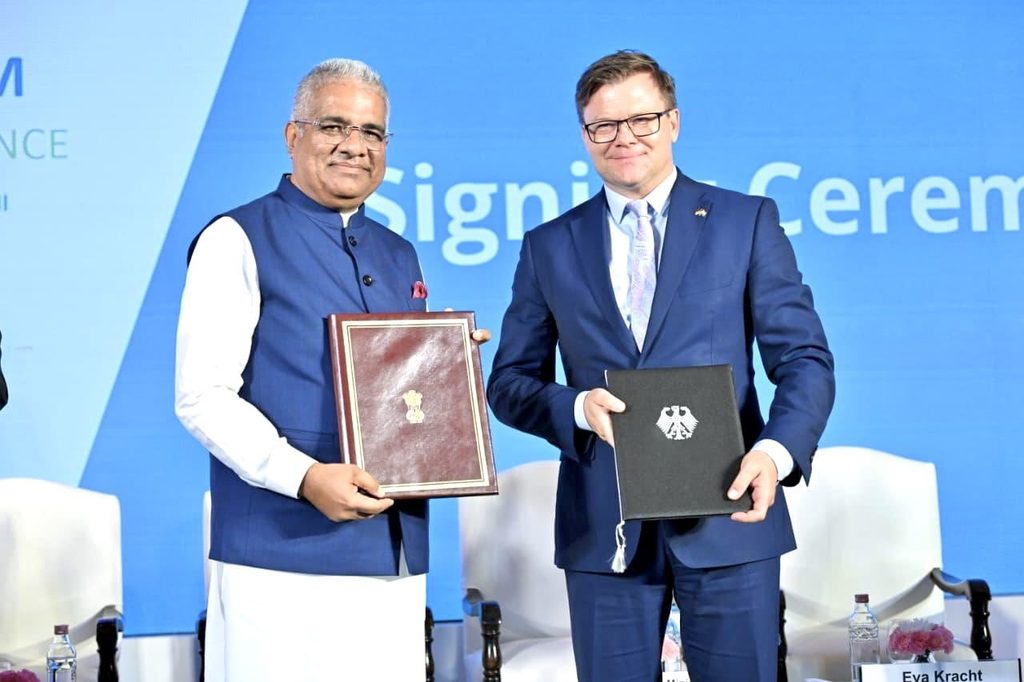
New Delhi: India and Germany on Tuesday reaffirmed their commitment to advancing environmental sustainability and climate action and signed a Joint Declaration of Intent (JDI) on the Conservation and Wise Use of Wetlands of International Importance on the sidelines of the 4th Indo-German Environment Forum (IGEF).
The agreement seeks to strengthen bilateral cooperation for the conservation and sustainable management of wetlands, recognising their crucial role in maintaining biodiversity, supporting livelihoods, regulating water resources and strengthening climate resilience.
Speaking on the occasion, Union Minister Bhupender Yadav said the theme “Together For More Resilience” reflects the need for stronger cooperation to build climate-resilient, resource-efficient and sustainable development pathways.
He said addressing the growing impacts of climate change and environmental degradation requires coordinated efforts among countries, institutions, businesses, scientific organisations and local communities.
He said India has been consistently achieving its commitments under its Nationally Determined Contribution (NDC) ahead of schedule, reflecting the scale at which environmental transformation is taking place in the country.
Highlighting the economic potential of resource efficiency and circularity, the Minister said India’s circular economy has the potential to generate a market value of more than USD 2 trillion and create close to 10 million jobs by 2050.
The Minister said the establishment of the Resource Efficiency and Circular Economy Industry Coalition during India’s G20 Presidency was an important step in bringing resource efficiency and circularity into the global economic conversation.
Addressing the event, H.E. Carsten Schneider said India’s rapid expansion of renewable energy, with solar panels and wind turbines coming up across the country, makes it a role model for other regions of the world.
He said India was truly a country of the future, marked by a strong sense of momentum and progress and an inspiring innovative spirit among its young population.
The German Minister noted that foundations of India-Germany relations were solid, with the two countries celebrating 75 years of diplomatic relations this year.
The India-Germany partnership comes at a time when wetlands are facing increasing pressures from climate change, pollution, habitat degradation, unsustainable resource use and changes in land-use patterns.
The JDI is expected to provide a framework for sharing knowledge, expertise and best practices on wetland conservation and management.Wetlands are among the world’s most important ecosystems and provide a wide range of ecological and socio-economic benefits.
They support biodiversity, help regulate water flows, contribute to groundwater recharge and can act as natural buffers against floods and other climate-related risks.
The two countries also emphasised the importance of integrating environmental sustainability into development pathways while promoting efficient use of natural resources.
The 4th IGEF provided a platform for India and Germany to discuss key environmental priorities, including climate action, biodiversity conservation, resource efficiency and sustainable development.
The discussions also highlighted the importance of international cooperation in areas such as climate technologies, innovation, sustainable finance, capacity building and knowledge exchange, particularly to help countries strengthen their ability to respond to emerging environmental challenges.
The latest agreement further strengthens India-Germany environmental cooperation and reflects the shared objective of pursuing development pathways that are climate-resilient, resource-efficient and environmentally sustainable.
Earlier during the event, Yadav addressed the Indo-German Business Forum on the sidelines of the event. He spoke about the immense potential for collaboration in the green transition, particularly in renewable energy, energy storage, green hydrogen, energy efficiency, sustainable manufacturing and associated technologies.
“The Indo-German partnership has a strong foundation, and both countries are working closely to strengthen economic resilience while simultaneously advancing the transition towards low-carbon, resource-efficient and climate-resilient economies” he noted.