The projects are expected to directly benefit more than 3.5 million people, particularly in regions most vulnerable to climate change: UNEP
New Delhi: The Green Climate Fund (GCF) has approved more than USD 120 million in funding to enhance climate resilience in Ghana, the Maldives, and Mauritania.
The decision was taken in partnership with the UN Environment Programme (UNEP), to help vulnerable communities adapt to escalating climate impacts through a range of targeted solutions.
Requested by the three national governments, the initiatives will focus on nature-based adaptation strategies, climate-resilient agriculture, improved water security, and early warning systems. These measures aim to protect communities facing the growing threat of extreme weather, sea-level rise, and water scarcity.
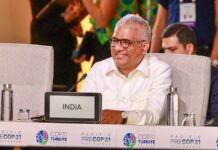
Henry Gonzalez, Chief Investment Officer of GCF, emphasized the importance of national leadership in the fight against climate change said, “The approval of these projects demonstrates how GCF is supporting country ownership of national climate action priorities in Ghana, Maldives, and Mauritania,” Gonzalez said. “These investments will positively impact key areas of climate resilience in all three countries.”
The projects are expected to directly benefit more than 3.5 million people, particularly in regions most vulnerable to climate change, including Small Island Developing States (SIDS) like the Maldives and the arid Sahel zone of Mauritania.
Martin Krause, Director of UNEP’s Climate Change Division, stressed the need for locally tailored solutions. “These new projects reflect UNEP’s deep commitment to supporting countries on the frontlines of climate change,” Krause stated. “Our focus is on contextualizing climate solutions to the benefit of the most vulnerable nations and communities with tailored, locally led, and science-based solutions.”
The funding represents a significant step toward scaling up adaptation finance and supporting long-term sustainability in areas where climate threats are becoming increasingly urgent
Project helps 120 communities in Ghana
Northern Ghana faces increasingly erratic rainfall and long dry seasons that have led to chronic food shortages, drying water bodies, and the destruction of infrastructure from flooding. Smallholder farmers, reliant on rainfed subsistence agriculture, are especially vulnerable.
In response, the new USD 70 million project – including a USD 63 million GCF grant – aims to build the resilience of agroecosystems and rural livelihoods.
The initiative will support 120 communities across eight districts in the North East, Upper East, and Upper West regions. Activities include improving access to climate data and early warnings, enabling dry season farming through water storage solutions, and restoring 28,000 hectares of degraded land to improve soil health, improve water retention and reduce flood risks.
Implemented by the Government of Ghana through the Environmental Protection Agency and Ghana Meteorological Agency, the project will benefit 619,000 people directly, while early warning alerts will reach up to 2.9 million people. Around 120,000 individuals will experience improved food security as a result of climate-resilient farming practices.
Project will be implemented over five year in Maldives
Maldives is the world’s most exposed country to climate change. Comprising 1,192 islands, nearly 80% of which lie less than one meter above sea level, Maldives faces the constant threat from rising sea levels. The USD 25 million project – expected to benefit more than half a million people – will be implemented over five years under the lead of UNEP.
It aligns with the goal of the Early Warnings for All initiative (EW4All) to ensure that everyone on Earth is protected from hazardous climate events through early warning systems by 2027 and it will deliver on the Maldives’ roadmap to achieve the EW4All Initiative, developed by the Government of Maldives and international partners to guide the scaling up of early warning systems in the country.
Project will boost food security in Mauritania
In the fragile zone between the Sahara and Sahel, prolonged droughts, sand encroachment, and water scarcity are threatening lives and livelihoods. With a USD 33 million investment — including a USD 30 million GCF grant — the new UNEP project will restore ecosystems and secure livelihoods in four vulnerable hubs: Aoujeft, Rachid, Tamcheket, and Nema. It will support green-grey infrastructure to fix dunes and control sand encroachment, improve access to water for farming and land rehabilitation, and scale up climate-resilient agriculture to boost food security and incomes.