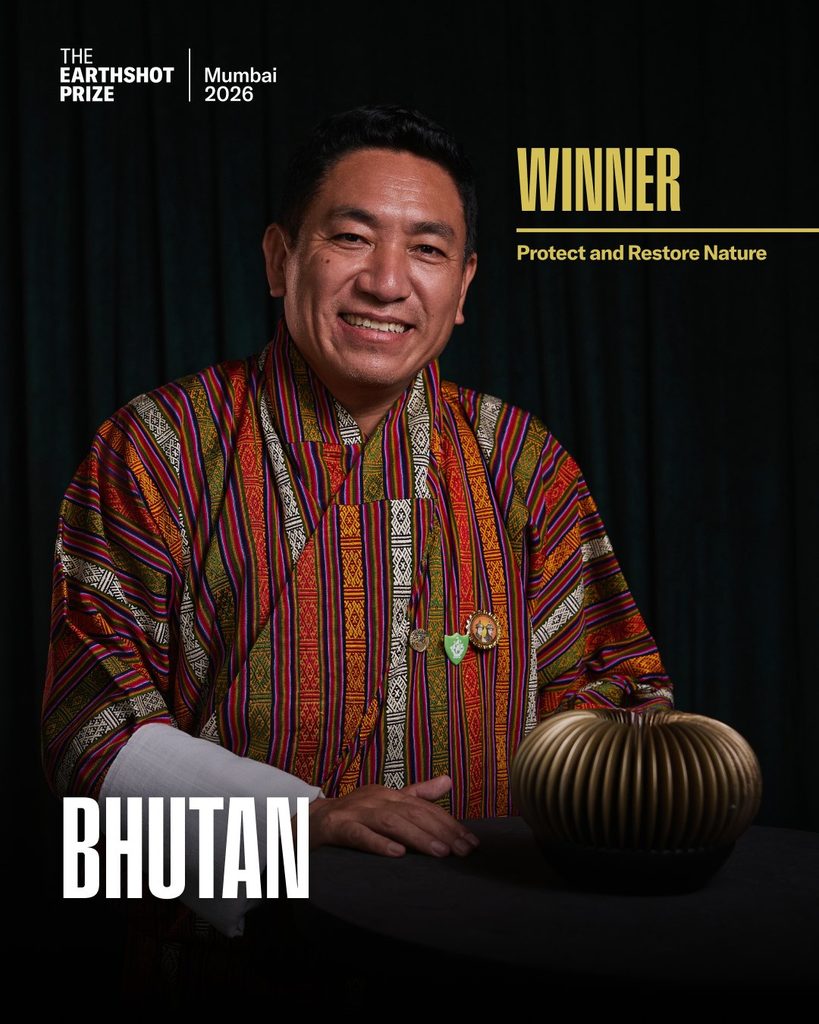
Mumbai:- Bhutan has won the 2026 Earthshot Prize in the Protect and Restore Nature category, securing USD 1.3 million to support its ambitious Restore Bhutan initiative aimed at restoring 50,000 hectares of degraded landscapes by 2030.
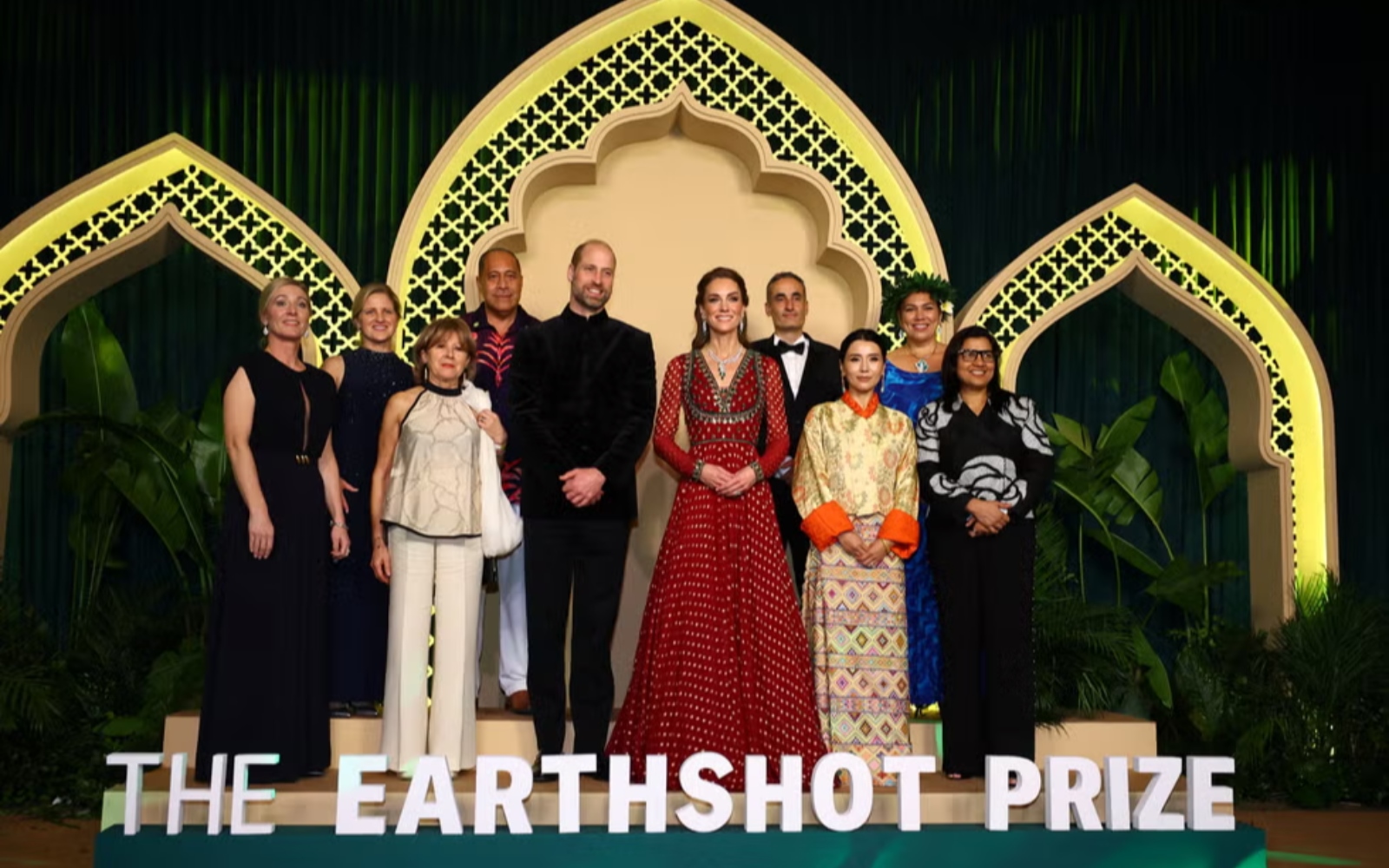
The award was announced on 17 November at a ceremony held at the Jio World Convention Centre in Mumbai, India. Catherine, Princess of Wales, presented the prize to Princess Chimi Yangzom Wangchuck, who accepted it on behalf of Bhutan.
Bhutan’s achievement marks a rare occasion in the history of the Earthshot Prize, with an entire country recognised rather than an individual organisation or project. The only previous country-level winner in the Protect and Restore Nature category was Costa Rica in 2021.
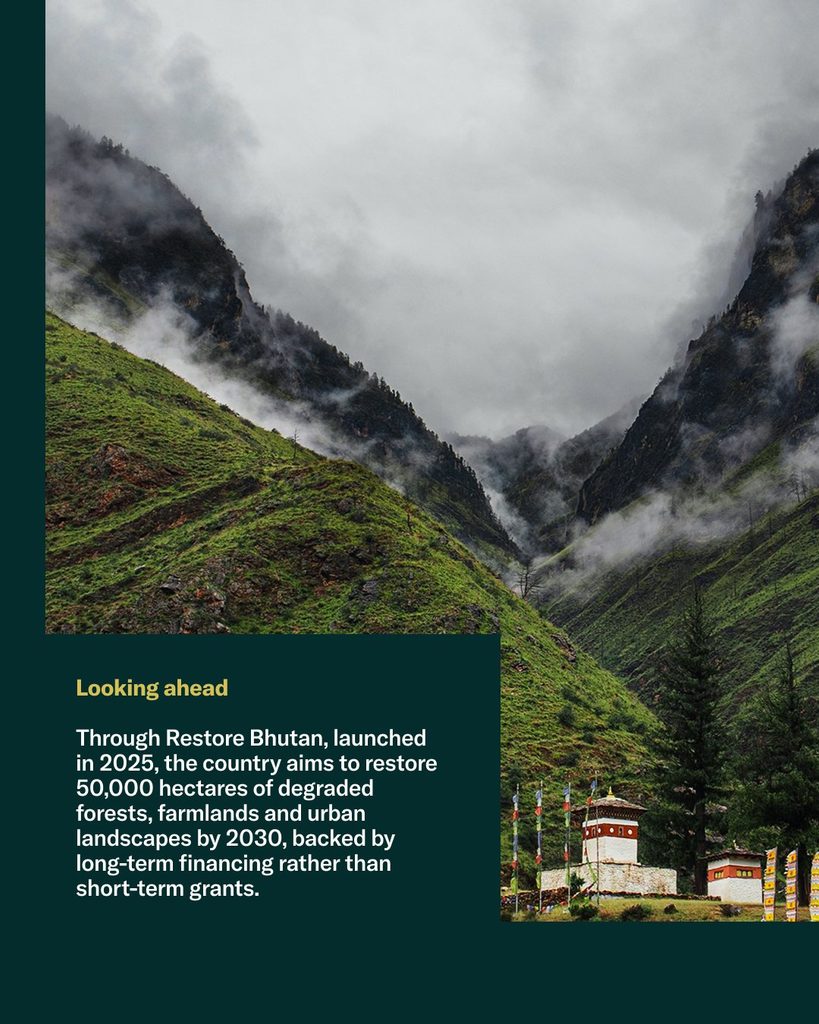
At the heart of Bhutan’s winning entry is Restore Bhutan, a national initiative launched in 2025 that brings together the Royal Government of Bhutan, the Department of Forests and Park Services, the Bhutan Trust Fund for Environmental Conservation, the Bhutan Ecological Society and Conservation International.
The programme aims to restore 50,000 hectares of degraded forests, agricultural land and urban landscapes by 2030. Its planned activities include forest restoration, improved management of fire-affected areas, agroforestry, and rehabilitation of degraded farmland and watersheds.
Unlike conventional conservation approaches that primarily focus on protecting existing natural ecosystems, Restore Bhutan places particular emphasis on repairing landscapes that have already suffered environmental degradation.
According to programme estimates, the initiative could deliver nearly two million tonnes of carbon dioxide savings and generate approximately 133 billion litres in water benefits. It also aims to strengthen livelihoods and climate resilience for more than 250,000 people.
These figures represent projected benefits rather than results already achieved. The Earthshot funding is expected to help move the initiative from national planning towards broader implementation.
Accepting the award, Princess Chimi Yangzom Wangchuck highlighted the close relationship between environmental protection and human wellbeing.
“In Bhutan, we believe that caring for nature is caring for ourselves,” she said.
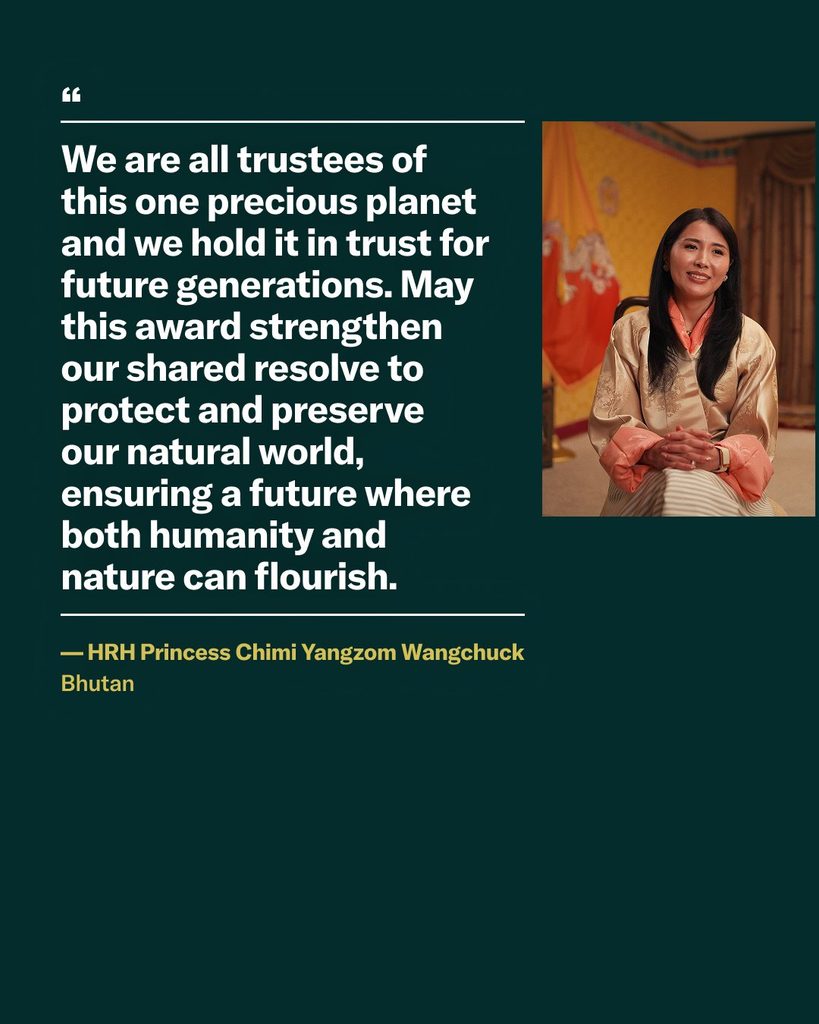
The Princess, who serves as royal patron of the Bhutan Ecological Society, represented the country at the ceremony, which brought together environmental leaders, investors, activists, scientists and public figures from around the world.
Bhutan’s recognition builds on its longstanding commitment to environmental conservation. The country’s Constitution mandates that at least 60 percent of its land remain under forest cover for all time. Forests currently cover nearly 70 percent of the country’s territory, while more than half of its land falls within protected areas and biological corridors.
These interconnected landscapes provide vital habitats for wildlife, safeguard biodiversity and protect important forest ecosystems and river catchments. Bhutan is also among the world’s few carbon-negative countries, absorbing more carbon dioxide than it emits.
The country’s forests and watersheds have significance beyond its borders, forming part of wider Himalayan freshwater systems that support an estimated 1.6 billion people across South Asia.
However, Bhutan’s strong conservation record does not make it immune to growing environmental pressures. Climate change, forest fires, land degradation and declining freshwater availability are increasingly threatening ecosystems and communities.
Around a quarter of the country’s monitored mountain springs are showing signs of drying up, while almost 18,000 hectares of land were affected by forest fires between 2021 and 2024.
Changing rainfall patterns, rising temperatures and longer dry periods are further increasing the risks of forest fires and placing pressure on the reliability of freshwater sources.
Restore Bhutan aims to address these challenges through science-based restoration planning, community participation and long-term financing mechanisms.
As part of its financing strategy, partners are also developing a proposed Restore Bhutan Impact Bond, which is intended to mobilise public, philanthropic and private investment for landscape restoration. Its eventual contribution will depend on the completion and implementation of the financing structure.
Bhutan’s 2026 Earthshot Prize victory therefore represents more than international recognition of its environmental leadership. It also provides an opportunity to accelerate the restoration of damaged ecosystems, strengthen climate resilience and demonstrate how conservation and sustainable development can advance together.