ANTALYA, TÜRKİYE | November 16, 2026: The first week has brought discussions on the temporary overshoot of the 1.5°C temperature threshold, accelerating the energy transition, climate adaptation and the role of nature into sharper focus. However, recognition of the crisis has not translated into agreement on how to address it.
The World Wide Fund for Nature (WWF), in its assessment of the first week, warned that progress has been limited and governments must go further and faster. It identified climate finance, adaptation and the future of the Mitigation Work Programme as unresolved issues that require urgent political intervention during the second week.
The warning reflects a wider concern surrounding COP31: the negotiations are increasingly characterised by a disconnect between ambitious declarations and the difficult decisions needed to turn them into action.
Climate finance: The biggest fault line between rich and developing nations
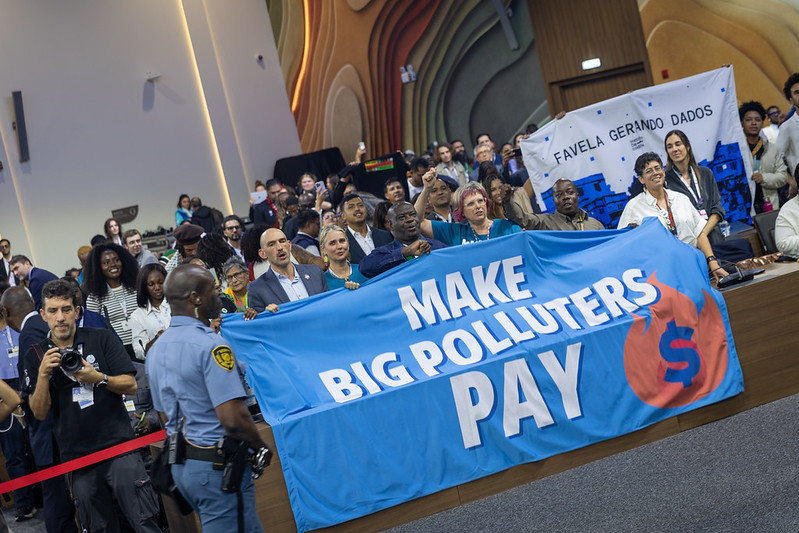
Climate finance remains perhaps the most consequential unresolved issue at COP31. The disagreement is not simply about how much money should be mobilised, but who should provide it, through which channels and whether the funding will be accessible to countries already facing mounting climate-related losses. Developing countries, particularly African nations, least developed countries and small island states, are demanding predictable, additional and accessible financial support from developed economies. They argue that countries with the greatest historical responsibility for greenhouse gas emissions must fulfil their obligations rather than shift the burden towards vulnerable economies.
Developed countries, meanwhile, favour a broader approach involving private-sector investment, mobilisation of alternative financial sources and enabling conditions for investment.
This difference has become a major obstacle in the Climate Finance Work Programme.
Developing countries want the programme to focus on the obligations of developed nations under Article 9.1 of the Paris Agreement, while several developed countries want the discussion to cover the wider scope of Article 9, including finance mobilised from other sources.
The dispute has particular significance for adaptation finance. Developing countries want the COP31 negotiations to secure the commitment to triple adaptation finance to at least $120 billion annually by 2035. They fear that a review process or future discussions could delay the delivery of money needed now for flood protection, drought resilience, coastal protection, food security and climate-resilient infrastructure.
Politically sensitive issue at COP31 is the future of fossil fuels.
Despite growing scientific evidence that rapid reductions in coal, oil and gas consumption are essential to limiting global warming, governments remain divided over whether the final political outcome should explicitly commit countries to transitioning away from fossil fuels.
The debate has exposed a familiar division between countries seeking stronger language on fossil-fuel phase-out and those resisting references that could constrain their energy policies.
According to reporting from Antalya, fossil-fuel-dependent countries have blocked formal discussions on phasing out coal, oil and gas, pushing the transition debate towards voluntary initiatives instead of stronger negotiated commitments. This is a major contradiction. Governments are discussing electrification, renewable energy, energy efficiency, grids and storage, yet the political language needed to accelerate the transition away from fossil fuels remains contested.
The COP30 Presidency’s launch of the Transitioning Away from Fossil Fuels Roadmap during the first week of COP31 has brought renewed attention to the issue. UN Secretary-General Guterres has backed the roadmap, describing an accelerated transition away from fossil fuels as fundamental to limiting temperature overshoot and building cleaner, more secure economies.
Mitigation Work Programme: Negotiations stuck over ambition and accountability
The future of the Mitigation Work Programme (MWP), established to accelerate emissions reductions this decade, has emerged as another major negotiating deadlock. The programme is due to conclude at COP31, making Antalya a crucial opportunity to decide whether it should continue and whether its mandate should be strengthened.
Although there is broad support for continuing the programme, countries remain divided over its duration, scope and effectiveness.
Some parties favour extending it until 2030, while others have proposed 2040 or continuation without a fixed end date. More importantly, governments disagree over whether the programme should become a stronger instrument for driving emissions reductions or remain primarily a platform for dialogue and exchanging experiences.
Adaptation: Vulnerable countries face another battle over delivery
Adaptation is another area where the negotiations have yet to produce the level of agreement demanded by climate-vulnerable countries.
For developing nations, adaptation is no longer a secondary component of climate policy. It is an immediate necessity as extreme heat, floods, droughts, rising sea levels and increasingly unpredictable weather threaten livelihoods, infrastructure and food systems.
The Global Goal on Adaptation (GGA), National Adaptation Plans (NAPs) and the Adaptation Fund have all remained among the outstanding issues after the first week. According to the Third World Network’s November 16 assessment, disagreements over these matters were among the issues requiring further negotiations in the second week.
The concern is that governments may agree on technical indicators, reporting frameworks and adaptation planning without securing the financial resources necessary to implement them.
For countries already experiencing severe climate impacts, another set of frameworks without adequate funding would represent limited progress.
Just transition: Who pays for the transformation?
The debate over a Just Transition Mechanism has also exposed differences between developed and developing countries. A transition away from fossil fuels cannot be achieved simply by shutting down coal mines, restricting industrial emissions or replacing conventional energy infrastructure. It also requires protecting workers, supporting communities dependent on fossil-fuel industries, developing alternative employment and ensuring affordable access to clean energy.
Developing countries want an effective mechanism that provides technical assistance, capacity-building, knowledge-sharing and financial support.
However, questions concerning its governance, institutional structure, funding and relationship with existing programmes remain unsettled.
The draft proposal discussed at COP31 envisages policy guidance alongside an implementation component to coordinate practical assistance. But its provisions are still under negotiation. The broader challenge is whether just transition will become an operational mechanism with meaningful support or remain another institutional framework with limited financial backing.
Without a clear financing arrangement, the transition could impose disproportionate economic and social costs on developing economies and workers who have contributed least to the climate crisis.