

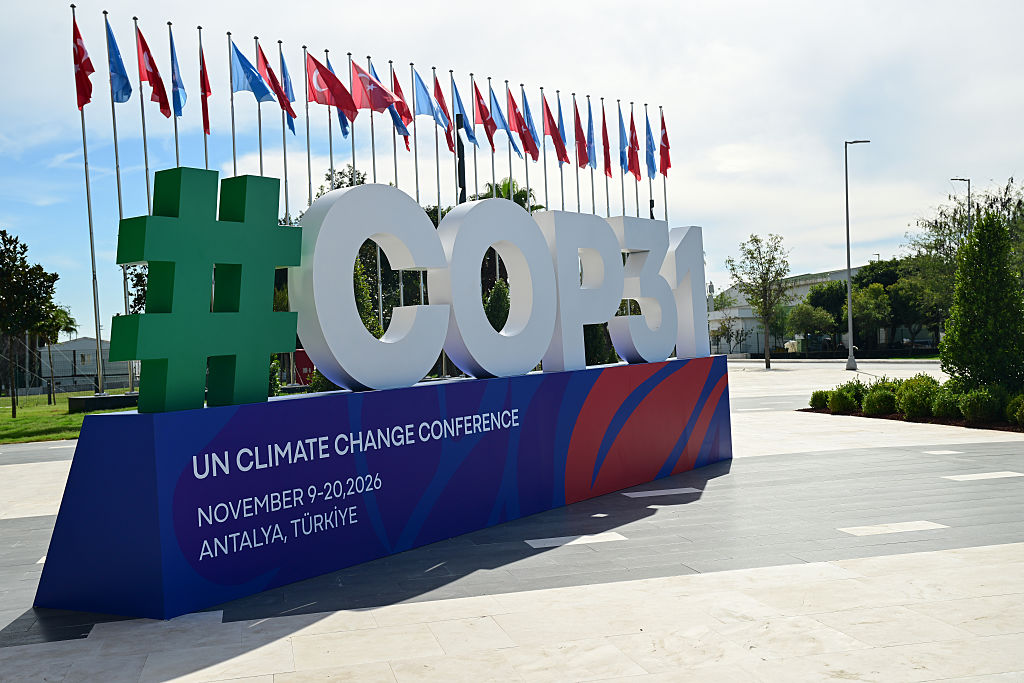
From the Kyoto Protocol to the Paris Agreement and the latest climate negotiations, world leaders have repeatedly promised to tackle global warming. Yet fossil fuel dependence, inadequate climate finance, political divisions and weak accountability continue to undermine global efforts to confront the climate crisis.
ANTALYA: As world leaders and climate negotiators gather for the 31st Conference of the Parties (COP31) in Antalya, Türkiye, the international climate process faces an uncomfortable question: after nearly three decades of negotiations, countless declarations and ambitious targets, why is the world still struggling to bring climate change under control?
Since the first Conference of the Parties in Berlin in 1995, successive climate summits have produced several landmark agreements, including the Kyoto Protocol in 1997 and the Paris Agreement in 2015. These agreements established the foundations of international climate cooperation, recognised the need to limit global warming and encouraged countries to strengthen their emission-reduction commitments.
Yet the gap between diplomatic promises and action on the ground remains substantial. Global greenhouse gas emissions remain high, fossil fuels continue to dominate the energy system, climate finance falls short of developing countries’ requirements, and vulnerable communities are increasingly exposed to extreme weather events.
The problem is not that the world lacks climate commitments. Rather, governments have repeatedly failed to translate those commitments into sufficiently ambitious, adequately financed and enforceable national policies.
One of the biggest weaknesses of the COP process is its dependence on consensus among nearly 200 countries, each with different economic interests, energy requirements and development priorities. While consensus gives international climate agreements legitimacy, it also makes ambitious decisions difficult to secure.
Negotiations frequently end with diluted language and compromises designed to accommodate competing national interests. Consequently, governments often celebrate the adoption of agreements without establishing sufficiently strong mechanisms to ensure their implementation.
The Paris Agreement, adopted at COP21 in 2015, was widely regarded as a historic breakthrough. It brought almost all countries into a common framework to limit global temperature rise to well below 2°C while pursuing efforts to restrict it to 1.5°C above pre-industrial levels.
However, its nationally determined contributions (NDCs) allow countries to set their own emission-reduction targets. Although the agreement includes transparency and reporting requirements, there is no international enforcement mechanism capable of compelling countries to deliver their promised emissions reductions.
This has created a persistent accountability problem. Governments can announce ambitious climate targets but delay implementation without facing sufficiently strong international consequences.
Another major contradiction is the continued dependence on coal, oil and natural gas. Despite growing international recognition of the need to transition towards cleaner energy systems, fossil fuels remain central to electricity generation, transport, industrial production and national economies.
Oil-producing countries remain concerned about the economic consequences of reducing petroleum production, while coal-dependent economies face challenges involving employment, energy security and industrial competitiveness. Developing countries also argue that affordable and reliable energy remains essential for poverty reduction and economic growth.
COP28 in Dubai in 2023 marked an important moment when countries agreed to transition away from fossil fuels in energy systems. However, translating this political commitment into clear, time-bound and adequately financed national transition pathways remains a major challenge.
The influence of fossil fuel interests in climate policymaking has also attracted criticism. Environmental organisations have repeatedly questioned the presence and influence of fossil fuel industry representatives at international climate negotiations, arguing that the interests of carbon-intensive industries can undermine the ambition of climate agreements.
Climate finance represents another major fault line in international negotiations, particularly between developed and developing countries.
Developing nations argue that industrialised countries bear greater historical responsibility for the accumulation of greenhouse gases because their economic growth was built on decades of carbon-intensive industrialisation. They maintain that countries contributing comparatively little to historical emissions should not be expected to bear the same financial burden of climate action.
The principle of Common But Differentiated Responsibilities and Respective Capabilities (CBDR-RC), embedded in the UN climate framework, recognises these differences in historical responsibility and national capabilities.
However, disagreements over who should provide climate finance, how much should be provided and whether funding should come through grants or loans continue to complicate negotiations.
At COP29 in Baku in 2024, countries agreed to a new climate finance goal of at least $300 billion annually by 2035, with developed countries taking the lead. The broader ambition was to scale up finance from all sources to $1.3 trillion annually by 2035.
Developing countries, however, criticised the agreement as inadequate compared with the scale of their climate investment requirements.
The problem extends beyond the amount of money committed. Much climate finance is delivered through loans or investment mechanisms that may increase the debt burden of vulnerable economies. Moreover, private investment often favours commercially attractive renewable energy projects rather than adaptation measures and community-level resilience.
For countries already experiencing severe floods, droughts, cyclones, heatwaves and agricultural losses, climate finance is not simply a matter of fulfilling international commitments. It is essential for protecting lives, livelihoods and infrastructure.
The establishment of the Loss and Damage Fund at COP27 in Egypt in 2022 was an important achievement. It recognised that some climate impacts are already unavoidable and that vulnerable countries require financial support to address the destruction caused by climate-related disasters.
However, establishing a fund and ensuring that it receives sufficient resources to meet the needs of affected communities are two different challenges.
The growing North-South divide has further complicated negotiations. Developed countries increasingly argue that major emerging economies must take greater responsibility for reducing global emissions, while developing countries insist that historical responsibility, financial capabilities and development needs must remain central to climate decisions.
India and several other developing nations have consistently emphasised that climate action must be equitable and should not compromise their legitimate development priorities.
Domestic politics also play a significant role in weakening international climate commitments. Governments may announce ambitious targets at international summits but hesitate to introduce policies that could increase energy prices, affect employment or create economic pressure on industries.
Changes in political leadership can also reverse climate policies. This makes long-term international commitments vulnerable to short-term electoral considerations and shifting national priorities.
Perhaps the most concerning aspect of the COP process is the widening gap between the commitments announced and the emissions reductions actually achieved.
The United Nations Environment Programme’s Emissions Gap Report 2026, titled “The Point of Return”, warns that the world remains significantly off track to meet the Paris Agreement’s temperature goals. Its assessment indicates that continued current policies could result in approximately 2.8°C of warming this century.
Even the full implementation of current national climate pledges would not be sufficient to close the emissions gap.
This underlines the urgency of strengthening national climate targets and accelerating their implementation rather than relying on successive rounds of diplomatic declarations.
The history of COP conferences reflects both important achievements and repeated shortcomings. The Kyoto Protocol established the first international framework with legally binding emissions targets for certain developed countries. The Copenhagen summit in 2009 failed to deliver the comprehensive agreement many had expected. The Paris Agreement subsequently established a universal framework for climate action.
COP26 in Glasgow brought an explicit reference to the phasedown of unabated coal power into a COP decision. COP27 established the Loss and Damage Fund, while COP28 produced the historic agreement to transition away from fossil fuels. COP29 focused heavily on climate finance, and COP30 in Belém continued discussions on implementation, adaptation and climate cooperation.
These developments demonstrate that international climate diplomacy has not been entirely unsuccessful. It has established common goals, strengthened cooperation and placed climate change at the centre of global policymaking.
However, diplomatic progress has not translated into emissions reductions at the speed required by climate science.
As COP31 proceeds in Antalya, the priority must therefore shift from announcing new commitments to delivering existing ones.
Governments need to strengthen their national climate targets, establish measurable fossil fuel transition pathways, increase investment in renewable energy and ensure that climate finance reaches vulnerable communities. Developed countries must deliver predictable financial and technological support, while emerging economies must accelerate their clean energy transitions without compromising legitimate development requirements.
Stronger transparency and accountability mechanisms are also necessary to monitor national performance and identify countries falling behind their commitments.
Ultimately, the credibility of the international climate process will not be determined by the number of leaders attending COP conferences, the length of negotiated declarations or the ambitious targets announced at press conferences.
It will be measured by actual reductions in greenhouse gas emissions, the speed of the transition away from fossil fuels, the amount of climate finance reaching developing countries and the ability of vulnerable communities to withstand climate impacts.
After nearly three decades of climate diplomacy, the world has developed an extensive framework of agreements and commitments. What it continues to lack is the political determination to implement them at the scale and speed required.
The climate crisis is no longer waiting for diplomatic consensus. The question confronting COP31 and future climate conferences is whether governments are finally prepared to move beyond promises and deliver meaningful action.





Good piece. The gap between pledges and action is really a gap in public attention, because long conferences rarely reach the people who never follow climate news. Simple tools that train perception, like a two minute daily test of how we read visual data, can make charts and forecasts less abstract for ordinary readers. Thanks for keeping this story visible.