Written by By Neeraja Kudrimoti, Practice Director (Climate Action), TRI
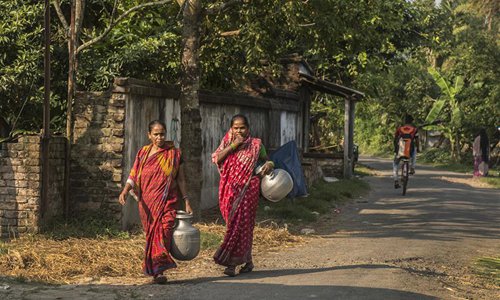
India is already living with erratic rainfall, prolonged droughts, floods, heatwaves, and declining water security. Women, smallholder farmers, forest-dependent communities, and other marginalised groups often bear the heaviest burden, despite contributing least to the problem. India is all set to engage at COP31! The global conversations and negotiations must travel beyond the rooms and initiate action that is actually improved the quality of life in villages, landscapes, people and institutions.
For India, the real test of climate diplomacy lies in translating global goals into locally driven, inclusive, and resilient development. COP31 offers India an important opportunity to reaffirm that climate action must be just, locally grounded, and centred on those most affected.
India’s climate strategy must continue to connect national targets with district, block, and village-level planning and implementation. Panchayati Raj Institutions, community-based organisations, self-help groups, and frontline government functionaries are uniquely positioned to identify local climate risks and design responses rooted in local knowledge. When communities have access to relevant climate information, decision-making power, and resources, they can plan water conservation, restore common lands, adopt climate-resilient agriculture, and prepare for extreme weather. Locally driven action is not merely an implementation mechanism; it is the foundation of durable climate resilience.
Pathbreaking Policies and Women-Led DRE
India has also demonstrated that well-designed public policy can create new pathways for inclusive climate action. Pathbreaking initiatives on decentralised renewable energy (DRE), including support for solar-powered livelihood technologies, clean-cooking solutions, and community energy systems, are expanding access to reliable energy while reducing emissions and strengthening rural resilience. Women-led DRE deserves particular attention. When women are supported to own, operate, and benefit from solar dryers, irrigation systems, cold storage, processing units, and other clean-energy enterprises, climate action becomes inseparable from livelihood creation and gender equality. Such models show that decentralised renewable energy can power rural enterprises, reduce drudgery, improve incomes, and build local adaptive capacity. Scaling these approaches requires coordinated policy support, access to finance, technical training, and strong last-mile institutions.
Collaboration as the Way Forward
No single institution can address the scale and complexity of climate change. Effective climate action requires collaboration between governments, communities, civil society, researchers, and the private sector. Governments can provide enabling policies, finance, and technical support; communities bring lived experience and legitimacy; and institutions can bridge knowledge, capacity, and accountability. India has strong examples of such collaboration, from watershed development and millet revival to women-led water governance, community-based natural resource management, and women-led renewable energy enterprises. COP31 should reinforce the importance of decentralised governance and participatory planning as central pillars of climate policy, rather than treating them as peripheral implementation details.
Strengthening Climate Resilience
For India, resilience must be built where people and landscapes interact. This means investing in water security, sustainable agriculture, agroforestry, restoration of degraded landscapes, and climate-responsive livelihoods. It also means recognising women not only as vulnerable groups or victims but as leaders of adaptation and mitigation. It also means that climate action is not just bucketed as highly technical or scientific, it is rooted in local culture, people, institutions and landscapes.
Women-led climate resilience is particularly powerful in water-stressed regions. When women participate in water governance, land restoration, local planning, and clean-energy enterprises, solutions are more practical, inclusive, and sustainable.
Strengthening community leadership for Climate Action, along with that of Panchayats and frontline institutions, can transform climate action from a top-down mandate into a shared public effort. The future of climate action will be decided not only in global forums, but in the everyday choices and collective leadership of communities across India.