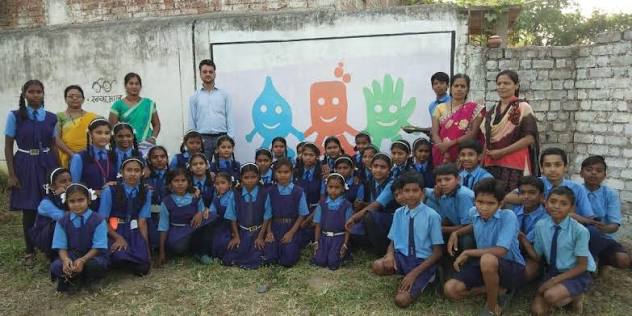
New Delhi:- Nearly one-fifth of children worldwide who lacked access to sanitation services in schools in 2025 were in India, according to the latest report by the WHO-UNICEF Joint Monitoring Programme (JMP).
The report, “Progress on Drinking Water, Sanitation and Hygiene in Schools 2015-2025,” stated that around 50 million children in India were among the 244 million children globally who did not have access to sanitation services in schools in 2025.
Despite the scale of the gap, India recorded a 14 per cent reduction in the number of schools without sanitation services over the period assessed, the report noted.
The findings highlight the continuing challenges in ensuring adequate water, sanitation and hygiene (WASH) facilities in schools, particularly for children who depend on schools for access to essential sanitation services.
The WHO-UNICEF Joint Monitoring Programme (JMP) produces internationally comparable estimates tracking progress on drinking water, sanitation and hygiene. It is also responsible for global monitoring of WASH-related targets under the United Nations Sustainable Development Goals (SDGs).
The latest figures underline the need for continued efforts to expand and maintain sanitation infrastructure in schools, as countries work towards universal access to safe and adequate WASH services.
The 2030 Agenda for Sustainable Development includes global goals for water and sanitation and for education. Goal 4 aims to ensure “inclusive and quality education for all and promote lifelong learning” and includes targets to build and upgrade education facilities that are child-, disability- and gender-sensitive and provide safe and effective learning environments for all.
This includes providing all schools with access to electricity, computers, the internet, adapted infrastructure and materials for students with disabilities, and basic WASH services.
Goal 6 aims to “ensure availability and sustainable management of water and sanitation for all” and includes targets for universal access to safe drinking water, sanitation and hygiene for all.
“In 2025, despite progress, 244 million children still had no sanitation service at their school,” the report said. India accounted for 50 million of them, Nigeria 34 million, Ethiopia 26 million, the Democratic Republic of the Congo 11 million and Indonesia 8 million, the report said.
“India performed comparatively better on school drinking-water access.
In 2025, around 12 million Indian children lacked drinking-water services at school, accounting for roughly one in every 20 children globally without such services.
“India is among 28 of 62 countries considered on track to achieve universal basic drinking-water coverage in schools by 2030. Its basic drinking-water coverage increased by more than 4 per cent annually during the period assessed,” it said.
The monitoring report noted that with just five years remaining until the end of the SDG period, the world is not on track to achieve universal access to basic WASH services in schools by 2030.
“Achieving universal coverage will require a fourfold increase in the current rate of progress on basic drinking water, a fivefold increase in progress on basic sanitation, and a fourfold increase in progress on basic hygiene.
“Based on current trajectories, around 84 per cent of schools will have basic water services, 81 per cent will have basic sanitation services and only 79 per cent will have basic hygiene services in 2030.
“At the end of the SDG period, 10 per cent of schools will still have no water service, 7 per cent will have no sanitation service and 12 per cent will have no hygiene service,” it said.