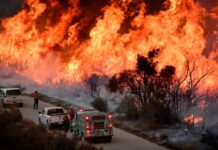
New Delhi: The Arab region experienced its hottest year on record in 2024, affecting nearly 3.8 million people, which put more climate pressures across one of the world’s most vulnerable areas, according to the World Meteorological Organization (WMO).
“2024 was the hottest year on record for the Arab region a continuation of a long-term trend. Temperatures are rising at twice the global average, with intense heatwaves that are pushing society to the limits,” said WMO Secretary-General Celeste Saulo. She warned that human health, ecosystems and regional economies are reaching their breaking point. “It is simply too hot to handle,” she added.
The State of the Climate in the Arab Region 2024 report was compiled by the WMO in partnership with the Economic and Social Commission for Western Asia and the League of Arab States to inform decision-making in a climate vulnerable region, which counts 15 of the world’s most water-scarce countries.
WMO data showed that the region’s average temperature in 2024 was 1.08°C above the 1991–2020 average, underscoring a steep warming trajectory that has accelerated since the early 1980s.
The report stated the length of heatwaves has increased, especially in North Africa and the Near East, with a clear upward trend since 1981. A number of countries reported temperatures of above 50 °C in 2024.
Drought worsened in 2024 in western North Arica after six consecutive failed rainy seasons, especially over Morocco, Algeria and Tunisia.
Conversely, extreme rainfall and flash floods caused death and destruction in otherwise arid countries including Saudi Arabia, Bahrain and the United Arab Emirates.
WMO said extreme events in 2024 affected nearly 3.8 million people and resulted in more than 300 deaths, mainly from heatwaves and floods.
The true economic and human cost is certainly underestimated, the report stressed. The frequency and severity of extreme weather and climate events have increased significantly, with an 83% rise in recorded disasters between 1980–1999 and 2000–2019.
Heatwaves have grown longer and more intense, particularly in North Africa and the Near East, with several countries recording temperatures exceeding 50°C during the year.
The extreme heat is compounding chronic water scarcity across the Arab world, one of the most water-stressed regions globally. Droughts are becoming more frequent and severe, threatening agriculture, food security, and rural livelihoods.
At the same time, the region has faced the opposite climate shock: sudden and destructive deluges, the report said. These intense rainfall events have caused flash floods and widespread disruption, highlighting the growing volatility of weather patterns driven by climate change.
“Climate models covering the Arab region project a potential rise in average temperatures of up to 5°C by the end of the century under high-emission scenarios. Rising sea levels also threaten coastal cities. Declining rainfall affects water scarcity and jeopardizes food production, said Rola Dashti Executive Secretary of Economic and Social Commission for Western Asia.
The WMO emphasized that the escalating combination of extreme heat, drought and severe storms poses mounting risks for regional stability and requires urgent adaptation and mitigation measures.
Ahmed Aboul Gheit, Secretary-General of the League of Arab States, said it was a “qualitative step towards enhancing our collective understanding of climate patterns, associated risks and their social and economic impacts.