Building Climate Resilience in India: The Environment holds a conversation with Nalini Shankar, Associate Director and Sector Lead for Climate and Disaster Management, Palladium Consulting India Pvt. Ltd

What are the key challenges India is facing in terms of climate resilience and disaster management?
India’s journey in disaster management has seen considerable progress, especially since the 2005 Disaster Management Act. We’ve become better at prevention, preparedness, and response. However, the sheer scale of our population and the diverse climates we experience make us particularly vulnerable to climate change and natural disasters.
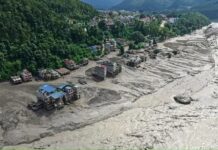
Take infrastructure, for example. It’s particularly susceptible to severe impacts from natural disasters like floods, cyclones, earthquakes, and landslides. These events often have cascading effects across multiple regions. Annual floods, for instance, are a major strain on the economies of states like Assam, Bihar, and Odisha. Similarly, landslides in the Himalayas and cyclones along our coastal states disrupt everything from daily life to essential supply chains.
Let’s not forget the highways—routes like NH-6 and NH-209 in the North-Eastern Region are critical for business, tourism, and livelihoods. When these are at risk, industries and communities feel the pinch, which can take a long time to recover. Recurrent disasters erode our public infrastructure, and rebuilding often diverts resources away from other critical areas like health and education.
One of our biggest challenges is shifting from a reactive to a proactive disaster management approach. The Sendai Framework has emphasized this but implementing it at the grassroots level is tricky. The complexity lies in the risk assessments themselves—accurately measuring hazards, vulnerabilities, and exposures isn’t easy. Then, there’s the added challenge of emerging risks like climate change, which constantly evolve and affect different regions in different ways.
Coordination is another hurdle. Disaster management involves various institutions at different levels—whether it’s the local disaster management authority or the national bodies. Effective collaboration across these layers is essential, but often difficult to achieve. Additionally, integrating indigenous knowledge and ensuring that our modern infrastructure is resilient to future risks are areas where we need more focused efforts.
Policy-wise, we’ve made strides, but there’s room for improvement. For example, while we’ve updated building bylaws in several states, ensuring strict compliance remains a challenge. National initiatives like Smart Cities and PMAY are great, but they need a stronger emphasis on climate resilience and disaster risk management.
Does Palladium assist the Government of India and private clients build resilience against these
climate threats?
Absolutely, Palladium is deeply committed to helping both the Government of India and private sector clients build resilience against climate threats and disasters. We’ve been working on several initiatives that showcase our dedication to this cause. One significant example is our partnership with the Government of Maharashtra. We’re providing technical support and helping them implement a comprehensive disaster
planning and management strategy.
This initiative is about taking a coordinated approach to disaster risk management across all phases—from preparedness and mitigation to response, relief, and recovery. What’s exciting is that this project is strengthening the Maharashtra State Disaster Management Authority’s systems, enhancing the capacity of the state, districts, and even villages to not just respond to disasters but also to prevent and mitigate them effectively.
Since April 2023, we’ve mobilized USD 350 million in public funds specifically for structural mitigation projects in Maharashtra’s coastal districts. These funds are being used to build resilience against cyclones, storm surges, and landslides—critical issues for the region. Our focus here is not just on reducing disaster- related casualties but also on mitigating economic losses through innovative risk management measures.
We also have a notable project under the Australia-Indonesia Partnership in Disaster Risk Management. Over a five-year period, we’re strengthening Indonesia’s disaster risk management systems and enhancing cooperation between Australia and Indonesia on humanitarian issues. What’s special about this project is its focus on making disaster risk management more equitable and inclusive.
We’re working closely with the Indonesian Disaster Management Authority (BNPB) and other agencies to improve disaster preparedness,
response, and recovery across provinces, districts, and villages. In addition, our Building Resilience and Adaptation to Climate Extremes and Disaster (BRACED) project has had a significant impact in regions like the Sahel in Sub-Saharan Africa and South Asia.
Through BRACED, we’ve supported over 220,000 people in coping with climate shocks, strengthened livelihoods, and influenced policies to integrate disaster risk reduction and climate adaptation into development efforts. For instance, in Nepal, smallholder farmers are
now earning extra income through climate-smart technologies like drip irrigation and renewable energy systems.
Palladium is also implementing the UK aid-funded Humanitarian Emergency Response Operations and Stabilisation (HEROS) programme since 2017 through the Humanitarian Stabilisation and Operations Team (HSOT). HSOT is a team of humanitarian and stabilisation experts who support the Foreign, Commonwealth and Development Office to deliver the UK’s humanitarian and stabilisation priorities through extensive operational expertise, world-class response capabilities. From Ukraine to Haiti, to Türkiye and Libya – we have been a trusted partner of the UK Government since 2017 and have responded to 83 crises across the world, providing relief for affected populations and saving lives.
As a global impact firm, how do you integrate global expertise and best practices into your
climate and disaster management initiatives in India?
India’s regional diversity brings unique challenges. Our advantage over local firms is our extensive experience in various circumstances and geographies. Our integrated One Palladium approach embedded in our delivery frameworks helps us seamlessly leverage our global solutions, expertise and adapt them for localized delivery. Our knowledge from Australia’s cyclone management and the Kakhovka dam collapse in Ukraine provides a broad baseline for long-term solutions. We are using these proven solutions and tailoring them to address disaster management challenges in India and curate our offerings based on the problems on the ground.
Does Palladium have any experience of working on projects that utilize nature-based solutions
for climate action?
At Palladium, our vision is to transform nature and ecosystems into a healthy state while reorienting markets to truly value natural capital and its restoration. We’re deeply committed to designing models that restore and protect nature at scale across various landscapes. These models not only help re-establish healthy ecosystems but also incubate business models that harness natural capital and generate value from ecosystem services.
This approach creates green jobs and delivers benefits to local communities, making the process of ecosystem restoration both impactful and sustainable.
We actively collaborate with investors, companies, and land managers to tackle climate change and restore nature at scale. One of our key initiatives in this area is Revere—a project we’re leading in partnership with the UK’s National Parks. Revere is focused on creating a scalable financing mechanism for ecosystem restoration. By commercializing natural capital and selling ecosystem services, this project aims to address the degradation of the UK’s protected landscapes.
The goal is to leverage £240 million in private finance by 2030 to fund nature recovery projects, positioning the UK’s 15 National Parks as leaders in addressing climate and ecological emergencies. What’s exciting is that this model is the first of its kind and can be
replicated in other high-value tropical landscapes.
Another significant initiative is Partnerships for Forests (P4F). This project is all about developing Forest Partnerships that bring together private companies, public sector actors, and communities dependent on forests.
The aim here is to catalyze investment in forests and promote sustainable land use. Through P4F, we provide grants and technical assistance to help these partnerships grow from concept to commercial scale, ensuring that forests are preserved and that the local communities benefit economically.
How does Palladium facilitate collaboration with diverse stakeholders on climate and disaster risk reduction projects?
Public-private partnerships (PPPs) indeed play a pivotal role in addressing the climate crisis, especially in a country like India, whereachieving net zero emissions by 2070 and a 45% reduction in carbon intensity by 2030 is central to the national Climate Agenda. These partnerships provide innovative solutions that combine the strengths of both the public and private sectors to tackle complex issues such as climate-resilient urban development, waste management, the circular economy, and large-scale afforestation.
At Palladium, we recognize that the private sector in India increasingly views the transition to a net zero economy as both a moral obligation and a significant business opportunity. The potential to create over 50 million jobs and generate an economic impact exceeding $15 trillion is substantial. Moreover, nearly 90% of Indian corporate leaders see sustainability as integral to competitive advantage, strategic growth, and cost reduction.
Leveraging this momentum, Palladium’s role is to create the necessary strategies, build robust partnerships, mobilize capital, and implement programs that drive transformation on a societal, economic, and environmental level. We focus on creating an environment where diverse stakeholders—from government bodies to private companies—can come together to co-create solutions that not only address immediate climate and disaster risks but also contribute to long-term resilience and sustainable growth.
By blending public and private interests, we help unlock the financial, technical, and managerial resources needed to drive large-scale impact, making climate action both feasible and sustainable.
Looking ahead, what emerging trends or areas of focus do you foresee in this sector, and how is
Palladium preparing to address these?
Disaster management has over the years undergone a paradigm shift and has become increasingly challenging owing to the climate-induced uncertainties and the frequency and severity of the occurrence of these events. This requires collective and innovative actions. Some of the emerging trends that Palladium is also embedding into its delivery frameworks include the use of data and integration of technology for decision-making, early warning, search and rescue, etc., building the resilience of communities to manage disasters, to strengthen government capacities to plan and manage disasters and to create awareness across all stakeholders through targeted training and capacity building initiatives.
This year, Palladium identified five key strategies to enhance private partnerships and scale solutions. First, we’re focused on empowering local entrepreneurs and businesses to innovate and accelerate their nature- and climate-positive ideas.
This grassroots approach not only sparks innovation but also aligns with our broader goal of creating sustainable pathways out of poverty. Second, we are attracting investors by employing investment strategies that have proven successful locally, which can then be replicated globally with some regional tailoring.
Third, our solutions emphasize deep stakeholder engagement, leveraging Indigenous knowledge and practices to ensure that interventions are co-designed with local communities.
This ensures that the solutions we implement are both effective and culturally relevant. Fourth, we are integrating disaster and climate finance systematically, ensuring that policies incorporate climate considerations alongside economic and environmental objectives. Lastly, we are scaling for impact by leveraging science and evidence. Successful initiatives require a foundation of robust evidence and strategic collaboration that transcends borders.
At Palladium, we recognize that disaster management necessitates a multi-disciplinary approach, combining strong political will with a risk-aware civil society. By understanding the intricate linkages between climate and disaster, we are enhancing our efforts to reduce impacts and achieve overall resilience.