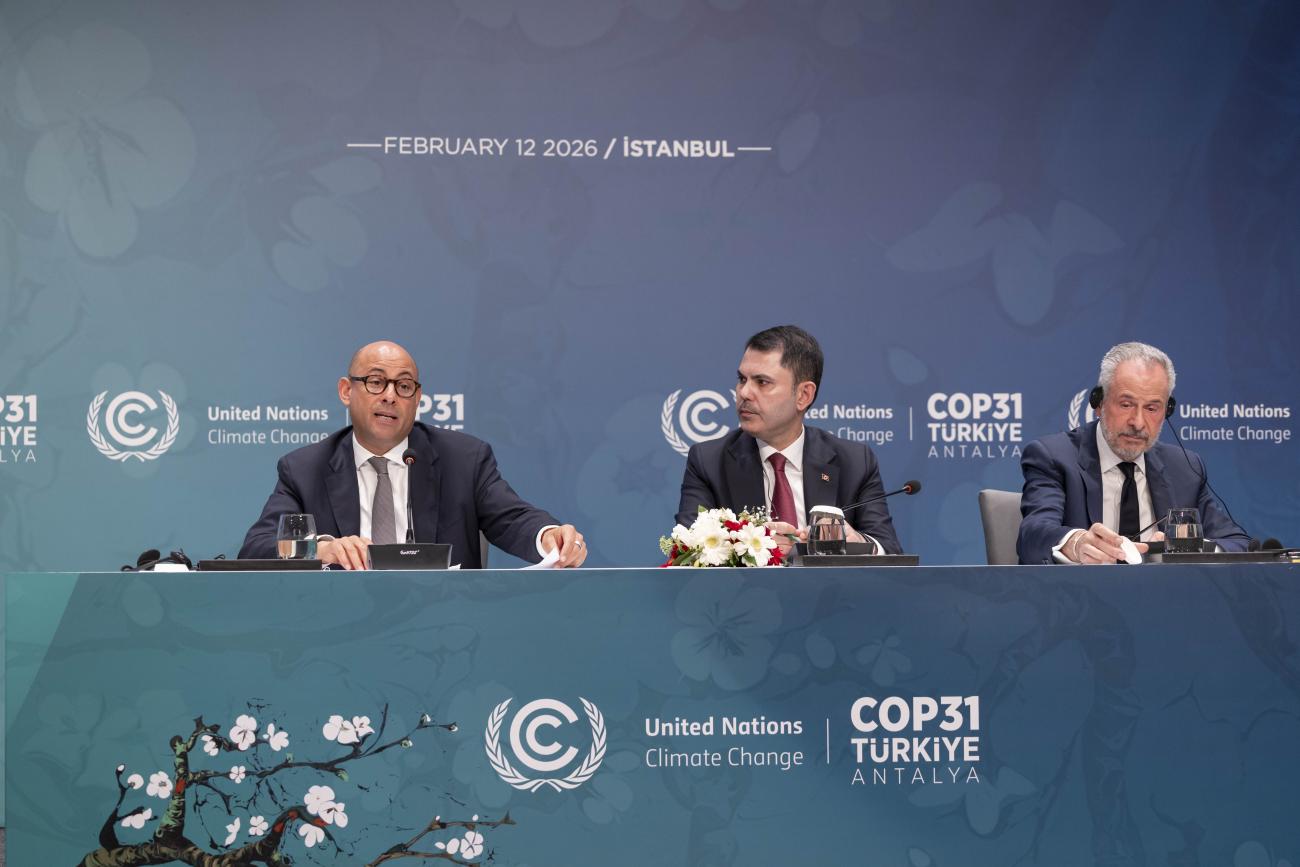
UN chief calls for faster implementation of climate commitments, stronger adaptation finance, tripling of renewable energy capacity and sharp cuts in methane emissions as COP31 opens in Türkiye
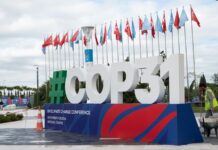
ANTALYA, November 9: The world must move beyond setting climate targets and translate existing commitments into practical, measurable action to tackle global warming, UN Climate Change Executive Secretary Simon Stiell said on Monday as the 31st UN Climate Change Conference (COP31) opened in Antalya, Türkiye.
Calling for a decisive shift towards the implementation of climate commitments, Stiell said COP31 must “supercharge solutions” by breaking down global targets and national climate plans into concrete steps that can accelerate the transition to clean energy, strengthen climate resilience and reduce greenhouse gas emissions.
In his opening address, Stiell stressed that while successive climate conferences and the Paris Agreement had helped reshape global policies and markets, the pace and scale of progress remained inadequate and inequitable.
“Progress is nowhere near far enough or fair enough,” he said, urging countries to focus on delivering tangible outcomes rather than limiting their efforts to announcing targets.
Highlighting the growing economic competitiveness of clean energy, Stiell said 90 per cent of large renewable energy projects were now cheaper than fossil fuel alternatives. However, he emphasised that countries needed to accelerate renewable energy deployment, expand electricity grids and strengthen cross-border energy connectivity.
One of the key priorities at COP31, he said, must be finding practical ways to deliver the commitment to triple global renewable energy capacity by 2030.
Stiell called for solutions to triple adaptation finance, improve access to already committed funds and provide greater clarity on delivering the climate finance commitments of $300 billion annually and the broader $1.3 trillion financing ambition.
He said the agreements reached at COP31 must help countries mobilise resources without reopening previous agreements, adding that the entire global financial system needed to step up to meet the scale of the climate challenge.
On adaptation, he emphasised the need for agreements that would enable funds to reach vulnerable countries and establish indicators to measure progress at the national level.
Developing countries, particularly those facing increasingly severe climate impacts, continue to demand predictable, accessible and adequate financial support to protect communities, infrastructure and livelihoods.
Stiell also identified methane reduction and electrification as two of the most important immediate interventions for limiting global warming.
He called for sharp cuts in methane emissions, particularly from the oil and gas and waste sectors, alongside accelerated electrification and expansion of clean energy infrastructure.
Describing action on methane and electrification as a critical combination, he said these measures could reduce projected global warming by half a degree Celsius.
The UN climate chief also highlighted the economic benefits of renewable energy, saying renewables had saved around half a trillion dollars globally last year and another $265 billion in the first half of 2026.
He argued that clean energy was not only essential for meeting climate goals but also offered protection against volatile fossil fuel prices, inflation and energy security risks.
Stiell underlined that fairness must remain central to the global transition towards clean energy and climate resilience. He said an agreement on the Just Transition Mechanism would help countries ensure that entire societies, including workers and vulnerable communities, could participate in and benefit from the transition away from fossil fuels.
He also warned that the impacts of global warming were already imposing enormous costs on communities worldwide, with vulnerable populations bearing the heaviest burden.
Referring to recent climate-related tragedies in the Himalayas and mounting extreme weather pressures across regions, he said the climate crisis was deepening existing inequalities and threatening international solidarity.
He also pointed to the potential impact of a strong El Niño event, warning that it could intensify an already worsening climate situation and place additional pressure on communities and economies.
This year’s conference is also adopting a distinctive approach through a partnership between Türkiye and Australia, aimed at advancing climate solutions both through formal negotiations and the COP31 Action Agenda.
Stiell said the Action Agenda would provide additional opportunities for countries to coordinate implementation and strengthen collaboration with businesses, financial institutions, civil society and other non-state stakeholders.
However, he cautioned that the initiative must not become an alternative to governments fulfilling their formal climate commitments.
“The Action Agenda is not about giving countries a way out of delivering on their commitments. It is about boosting their implementation,” he said.
He also acknowledged that many developing countries had been unable to participate fully in the Action Agenda and called for greater support to ensure they could benefit from opportunities related to climate resilience and clean energy transitions.
Despite the increased emphasis on practical action, Stiell said formal negotiations would remain at the heart of the UN climate process.
Key areas requiring progress include mitigation, adaptation, climate finance and the Just Transition Mechanism.
He said stronger agreements on mitigation could accelerate climate action across sectors and economies, while adaptation agreements would help direct financial resources and establish measurable indicators for national progress.
The conference is being held under the presidency of Türkiye’s Environment, Urbanisation and Climate Change Minister Murat Kurum, while Australia’s Minister for Climate Change and Energy Chris Bowen is leading the COP31 negotiations.
Stiell said the outcomes of the two-week conference would also be important in preparing the groundwork for the second Global Stocktake, scheduled for 2028, which will assess collective progress towards the goals of the Paris Agreement.
“No COP is a silver bullet,” he said, but insisted that COP31 must deliver further progress.
“We have a responsibility to take it,” Stiell said, calling on governments to move from commitments to implementation.