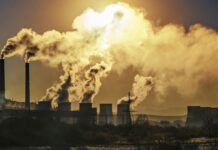
Failure of a state to take appropriate action to protect the climate system … may constitute an internationally wrongful act: ICJ
The Hague: The International Court of Jusctice (ICJ) opined that states have binding obligations under “international law” to take effective measures against anthropogenic greenhouse gas emissions and address the harmful effects of climate change.
In a landmark ruling on Wednesday, the International Court of Justice (ICJ) delivered its long-awaited Advisory Opinion on the “Obligations of States in respect of Climate Change” declaring that states have binding “legal obligations” under international law to combat climate change and its devastating impacts.
“Failure of a state to take appropriate action to protect the climate system … may constitute an internationally wrongful act,” court President Yuji Iwasawa said during the hearing.
The court also said countries harmed by climate change could be entitled to reparations for the damage they have suffered from rising global temperatures, but what they are owed should be determined on a “case by case” basis.
The opinion was requested by the United Nations General Assembly in March 2023, reflecting growing global concern over the inadequacy of state responses to the climate crisis and the urgent need for legal clarity on state responsibilities.
MULTIMEDIA: Photos and videos of the reading of the #ICJ Advisory Opinion on States Obligations in Respect of Climate Change are available here: https://t.co/Ah5eUsMbk9 pic.twitter.com/wslE8AJ1MT
— CIJ_ICJ (@CIJ_ICJ) July 23, 2025
In response to the question, the Court said that states are legally bound under multiple international legal instruments to protect the environment from anthropogenic greenhouse gas emissions. These instruments include the United Nations Framework Convention on Climate Change (UNFCCC), the Kyoto Protocol, and the Paris Agreement.
According to the Court, states party to these treaties are obligated to adopt measures aimed at mitigating emissions, adapting to climate impacts, and cooperating with each other in good faith to fulfill the objectives of the agreements.
It said under the Paris Agreement, states must act with due diligence and in accordance with the principle of common that wealthier and more developed nations are expected to take the lead in combating climate change.
The Court also emphasized that states must prepare, maintain, and progressively enhance nationally determined contributions (NDCs) that are capable of achieving the Agreement’s key goal of limiting global temperature rise to 1.5°C above pre-industrial levels.
These obligations are not symbolic; they are concrete and measurable, and states are expected to take real steps to meet them, it said.
Furthermore, the Court found that states have obligations to cooperate on adaptation efforts and to transfer technology and financial resources in good faith, especially to countries that are most vulnerable to the impacts of climate change.
The Court also noted that other multilateral environmental treaties impose climate-related obligations, including the Vienna Convention and the Montreal Protocol (including its Kigali Amendment) concerning ozone-depleting substances, the Convention on Biological Diversity, and the United Nations Convention to Combat Desertification.
Additionally, under the United Nations Convention on the Law of the Sea, states have a duty to protect and preserve the marine environment, which includes addressing adverse effects of climate change on oceans.
In response to the second question from the General Assembly—regarding legal consequences for states that cause significant harm—the Court held that any breach of the identified obligations constitutes an internationally wrongful act that gives rise to state responsibility.
This includes a continuing duty to cease wrongful conduct, to provide assurances and guarantees of non-repetition if needed, and to make full reparation to injured states.
The opinion issued “unanimously” by the Court — only the fifth such consensus in its 80-year history — answers questions posed by the United Nations General Assembly in Resolution 77/276, adopted on 29 March 2023.
The resolution, driven by growing international pressure and advocacy from youth and small island nations, asked the Court to define states’ obligations regarding climate protection and the legal consequences for those failing to act.
It also comes after unprecedented levels of global participation from 96 countries and 11 international organizations presented oral arguments during two weeks of public hearings in December 2024, and 91 written statements were submitted, making this the most widely engaged proceeding ever in the Court’s history.