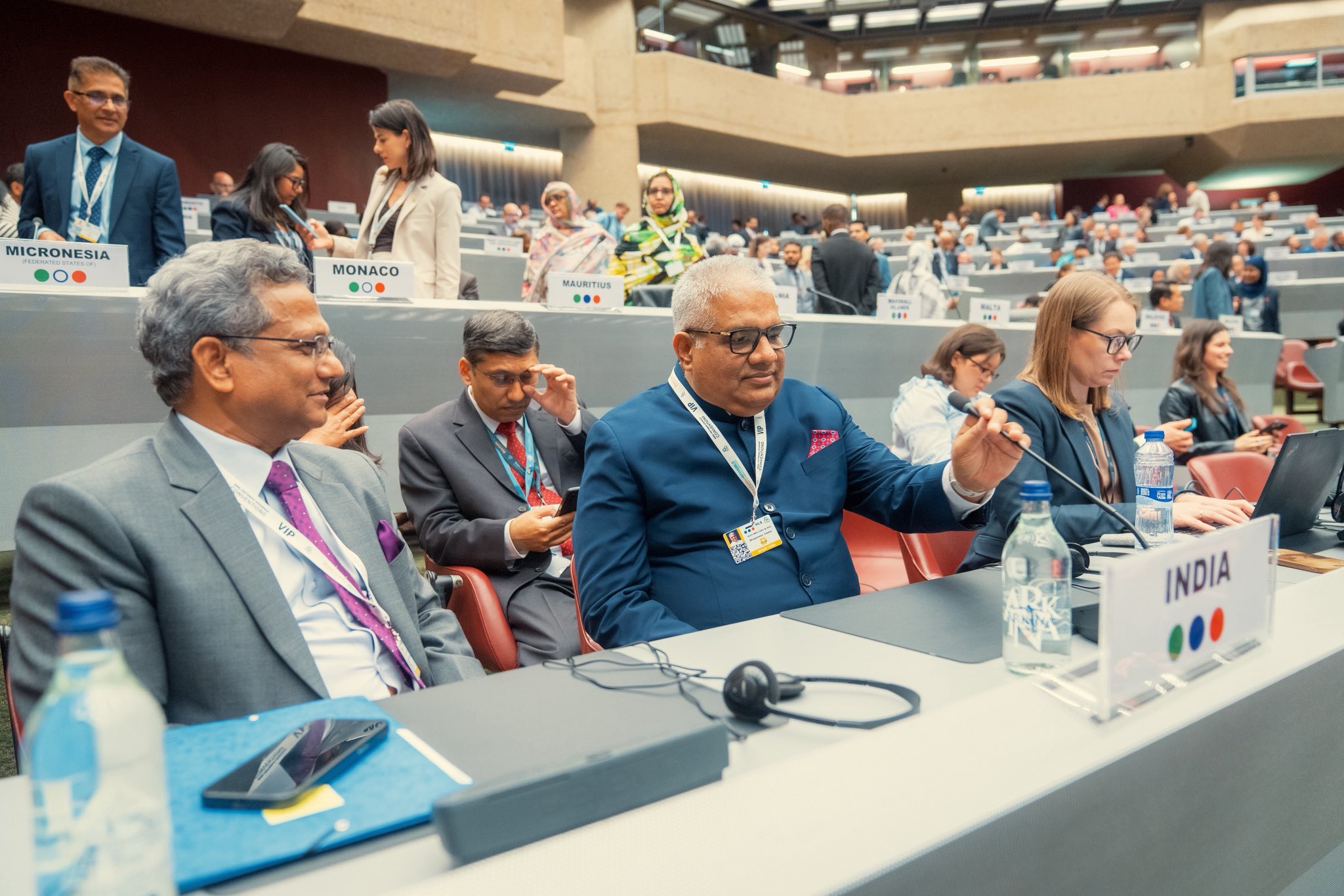
Geneva: Union Environment Minister Bhupender Yadav has underscored India’s commitment to tackling plastic pollution at a high-level consultation meeting of the Intergovernmental Negotiating Committee (INC) on plastic pollution, organized by Norway on the sidelines of the Basel, Rotterdam, and Stockholm (BRS) Conventions COPs in Geneva.
During the meeting, Bhupender Yadav shared India’s efforts to combat plastic waste, including the ban on certain single-use plastic items and the implementation of Extended Producer Responsibility (EPR) for plastic packaging.
The Minister also reaffirmed its global leadership on this critical issue, recalling the pivotal role it played under the leadership of Prime Minister Narendra Modi in bringing plastic pollution and marine litter to the forefront of international environmental discussions.
Notably, India was instrumental in introducing a resolution on plastic pollution and marine litter at the fourth session of the United Nations Environment Assembly (UNEA-4).
The meeting served as a platform for participating countries to exchange views and enhance cooperation ahead of the next INC negotiations aimed at forging a global agreement to end plastic pollution.
The Union Minister today attended the opening ceremony of the high-level segment of the BRS COP at the Geneva International Conference Center.
Attended the opening ceremony of the high-level segment of the BRS COPs which was followed by a group photograph at the Geneva International Conference Center today.
— Bhupender Yadav (@byadavbjp) April 30, 2025
The theme of this year’s BRS COP “Make Visible the Invisible: Sound Management of Chemicals and Wastes” resonates… pic.twitter.com/JijlPOLOAm
The BRS Conferences of the Parties kicked off on 28 April and will continue till 9 May 2025 in Geneva, Switzerland.
The theme of this year’s BRS COP “Make Visible the Invisible: Sound Management of Chemicals and Wastes” resonates deeply with the collective goal of protecting human health and the environment from the invisible threats of unsound chemicals and waste management.
The Basel, Rotterdam, and Stockholm Conventions (BRS) use different approaches to protect human health and the environment.
The Stockholm Convention eliminates or reduces the production and use of a group of chemicals called persistent organic pollutants (POPs), which pose risks to human health and the environment, potentially causing cancer, reproductive problems, and developmental disorders.
Based on the recommendations of its scientific body, the POPs Review Committee, parties to the twelfth meeting of the Conference of the Parties (COP) to the Stockholm Convention will consider whether to eliminate the production and use of three POPs.
The Rotterdam and Basel Conventions address trade in hazardous chemicals and wastes, respectively.
Both require the prior informed consent (PIC) of the importer before trade can take place. For example, all electrical and electronic waste (e-waste) became subject to the Basel Convention’s PIC procedure on 1 January 2025. The seventeenth meeting of the COP to the Basel Convention will consider how to improve its PIC procedure and follow up actions related to e-waste and plastic waste.
The Rotterdam and Basel Conventions address trade in hazardous chemicals and wastes, respectively. Both require the prior informed consent (PIC) of the importer before trade can take place.
All electrical and electronic waste (e-waste) became subject to the Basel Convention’s PIC procedure on 1 January 2025. The seventeenth meeting of the COP to the Basel Convention will consider how to improve its PIC procedure and follow up actions related to e-waste and plastic waste.