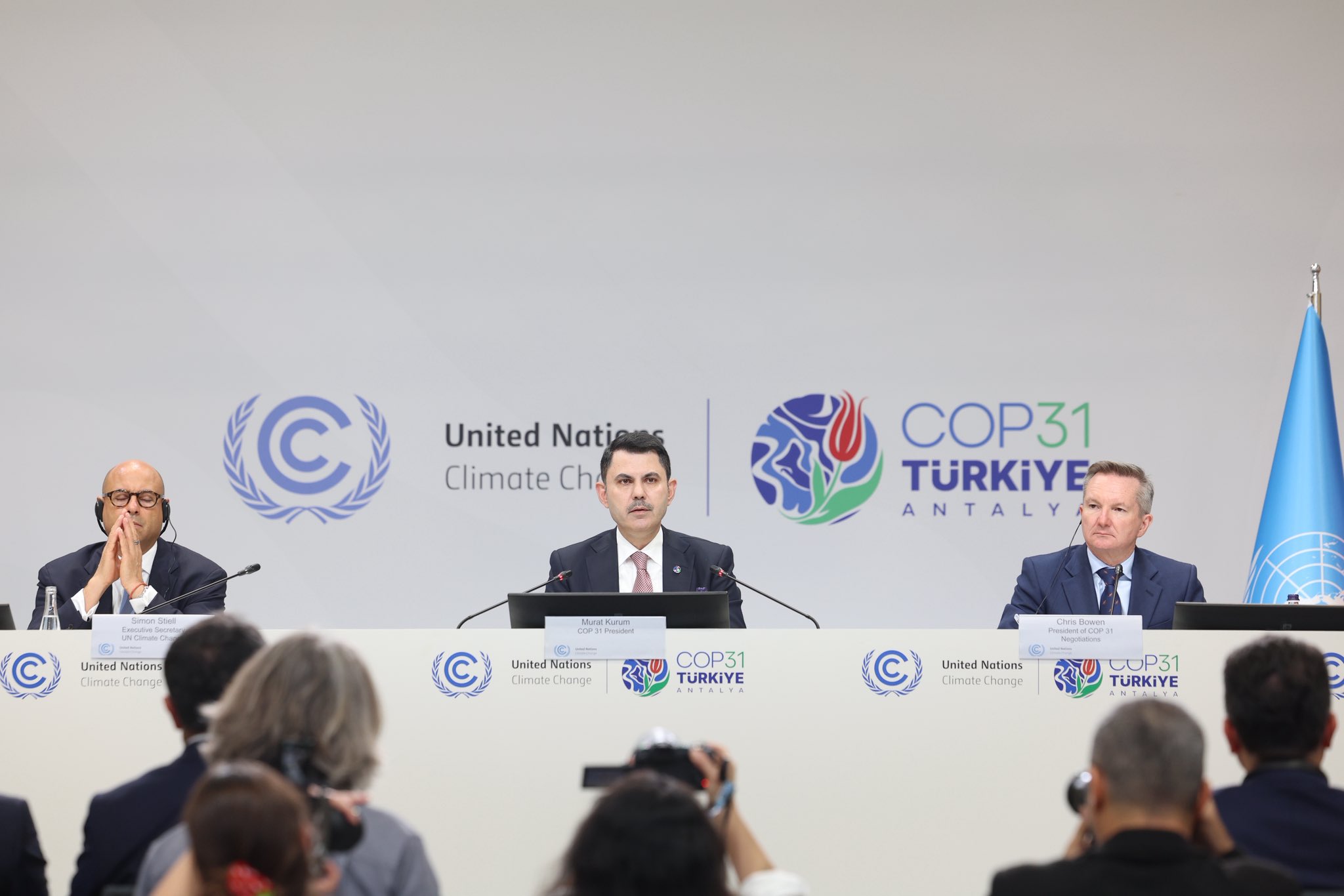
Anatalya:- The failure to reach a consensus has triggered unusually strong reactions from ministers, negotiators and representatives of climate-vulnerable countries, with several questioning whether the Antalya summit has done justice to the urgency of the climate emergency.
United Nations Secretary-General António Guterres expressed deep disappointment over the failure to reach an overarching agreement, highlighting the growing disconnect between political negotiations and scientific reality.
“I am deeply disappointed that COP31 has ended without consensus on an overarching outcome. I share the very profound frustration of all those who expected governments to rise to the moment the climate crisis demands,” he said.
“There may be no consensus in the negotiating room. There is no ambiguity in the science.”
The European Union was equally critical of the final negotiating text, arguing that an agreement which does not even mention fossil fuels cannot be considered a credible climate outcome.
The EU delegation said: “We will not endorse a cover decision or an Antalya pact that does not even mention fossil fuels, which is the key driver of climate change, and we will not accept negotiating backward in time.”
France’s Minister for Ecological Transition, Monique Barbut, questioned the contradiction between acknowledging the possibility of exceeding the 1.5°C temperature threshold and continuing business as usual.
“We cannot be announcing to the world that we are now getting to 1.5 increase in the temperature and do business like nothing was happening,” she said.
Panama’s Environment Minister Juan Carlos Navarro was particularly blunt about the removal of fossil fuel commitments from the draft.
“It is not acceptable to have a COP or a cover document that does not even mention fossil fuels, and we simply will not put up with it,” he said.
“We need to tell the truth and to speak clearly. We must transition away from fossil fuels in an orderly manner if we are to confront climate change.”
Navarro also questioned the unequal distribution of responsibility for addressing the climate crisis, saying: “You pollute, you pay. It’s actually rather simple. You cause the problem, you must help to fix it.”
For Pacific island nations, the absence of a clear fossil fuel commitment was seen as a direct threat to their future. Tuvalu’s Climate Minister Maina Talia described the inclusion of fossil fuel language as a red line for his country.
“We’re talking about the root cause of all this. Without it, we are wasting our time here,” he said.
The Marshall Islands delegation delivered one of the strongest condemnations of the proposed outcome, warning that vulnerable nations were being sacrificed to protect fossil fuel interests.
“We have been let down on all sides. We were presented with the worst possible response to overshoot, a response to enhance oil and gas. We will not be forced to accept false solutions. We will not compromise our future to benefit fossil fuel interests,” the delegation said.
The United Kingdom’s lead climate negotiator Kate Hughes also criticised the draft, saying it moved backwards on climate science at a time when countries needed to accelerate implementation.
“It moves us backwards on the science when we must accelerate implementation. It is a lowest common denominator, where it should have been instead presenting bold, collective ambition on climate action,” she said.
The disagreement was not limited to fossil fuels. African countries and other developing nations raised serious concerns about the failure to secure stronger commitments on adaptation finance.
Kenya’s delegation argued that the proposed outcome did not adequately recognise Africa’s particular vulnerabilities and financial requirements.
“Those who took the lead in emissions must take the lead in support,” the delegation said, calling on developed countries to provide the finance needed to make climate ambitions achievable.
Brazil’s negotiator Liliam Chagas also expressed concern that the proposed outcome did not adequately address the need for stronger adaptation finance, climate science and support for vulnerable communities.
Even China’s head of delegation, Li Gao, acknowledged disappointment over the absence of consensus, although he urged countries not to abandon multilateral climate negotiations.
“We cannot see this as a failure of this multilateral process. We believe that it reminds us we need to try to further the multilateral process to get the consensus,” he said.
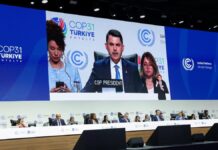
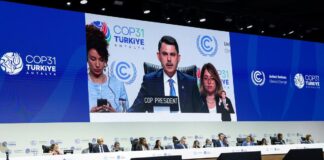
Meanwhile, COP31 President Murat Kurum defended the presidency’s handling of the negotiations, arguing that the final text could not be imposed on countries without consensus.
“We have done our utmost; ultimately, we have not imposed this text on anyone,” he said.
However, Australia’s Climate Minister and COP31 negotiations president Chris Bowen acknowledged that the failure to reach agreement was deeply disappointing.
“A lot of good things happened this COP… And all that is good work and a great thing but not enough when it comes to climate action,” he said.