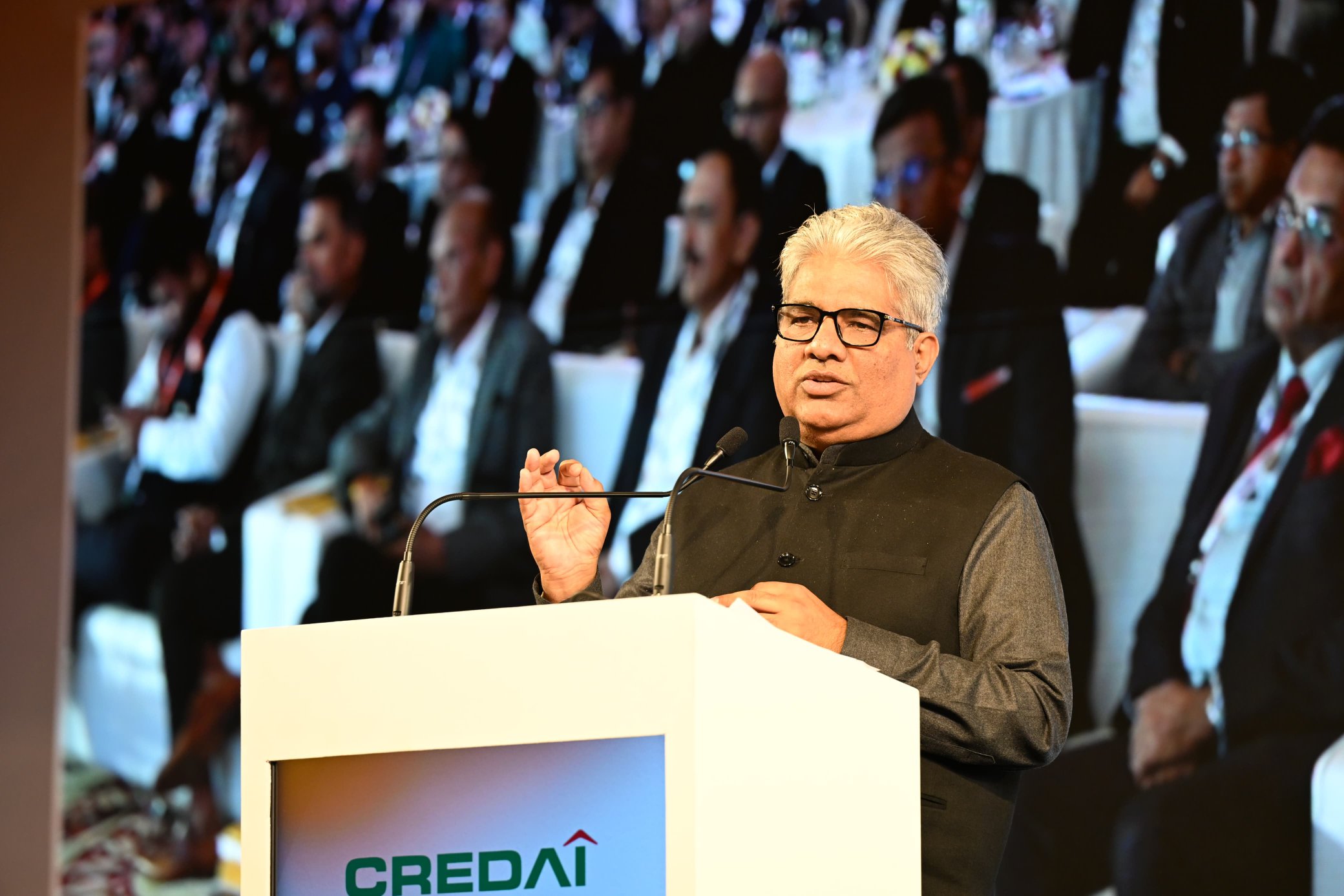
New Delhi: Union Minister for Environment, Forest and Climate Change Bhupender Yadav asserted that misinformation is being spread on the Aravalli issue and made it clear that no new mining leases will be permitted, particularly in core, protected and ecologically sensitive areas, including the Delhi-NCR region.
Addressing a press conference here, on Monday Mr Yadav said the Supreme Court’s recent observations on the Aravalli range have recognised and endorsed the government’s sustained efforts to protect one of India’s oldest and most fragile mountain ecosystems.
Citing the Supreme Court’s order, the Minister said that mining is absolutely prohibited in protected areas, eco-sensitive zones (ESZs), tiger reserves, wetlands and Compensatory Afforestation Fund Management and Planning Authority (CAMPA) plantation sites.
He underlined that the Court has directed that no new mining leases will be issued until a Management Plan for Sustainable Mining (MPSM) is prepared for the entire Aravalli range.
The Indian Council of Forestry Research and Education (ICFRE) has been tasked with preparing the MPSM, which will identify permissible and prohibited zones, assess the ecological carrying capacity, and lay down mandatory post-mining restoration and rehabilitation measures.
The plan will cover the Aravallis spread across Gujarat, Rajasthan, Haryana and Delhi, a range that plays a critical role in preventing desertification, recharging groundwater and acting as a natural barrier against dust storms from the Thar Desert.
On the controversy surrounding the definition of the Aravalli hills, Mr Yadav clarified that the criterion of landforms rising 100 metres or more applies only for mining-related purposes and does not allow or legitimise real estate or construction activity.
“This technical definition has been misrepresented. It is not meant to open the door for non-mining commercial activities,” he said.
Highlighting biodiversity concerns, the Minister said the region includes four tiger reserves and around 20 wildlife sanctuaries, all of which remain fully protected. These include key habitats that support leopards, hyenas, jackals, migratory birds and native forest species.
“The Supreme Court has clearly upheld the government’s green concerns,” he added.
Mr Yadav also pointed out that the Court has reiterated that no new mining leases will be allowed, except in cases involving critical strategic and atomic minerals, underscoring the primacy of national interest alongside strict environmental safeguards.
The Minister said these directions reinforce the government’s vision of promoting sustainable mining, curbing illegal mining, and strengthening initiatives such as the Green Aravalli Mission, which aims to restore degraded forest landscapes, improve green cover and enhance climate resilience in the region.
“The government is committed to balancing ecology and economy,” Mr Yadav said, adding that protection of the Aravallis is central to addressing air pollution, climate adaptation and long-term ecological security in north-west India.
The countroversy erupted after the new elevation-based definition of what constitutes the Aravalli hills could allow mining in areas below 100 metres, proving detrimental to the ecological balance of one of the world’s oldest mountain ranges.
The move comes after the top court on November 20 cleared the recommendations of a committee under the Union Ministry of Environment, Forests and Climate Change.
According to the new definition, “Aravalli Hill is any landform in designated Aravalli districts with an elevation of 100 metres or more above its local relief” and an “Aravalli Range is a collection of two or more such hills within 500 metres of each other”.
The Court made it clear that no new mining leases shall be granted in the Aravalli region until a comprehensive Management Plan for Sustainable Mining (MPSM) is prepared and approved.
The apex court directed that the Indian Council of Forestry Research and Education (ICFRE) will prepare the MPSM for the entire Aravalli landscape, cutting across state boundaries.
The plan must demarcate permissible and prohibited mining zones, assess ecological carrying capacity, and prescribe mandatory restoration, reclamation and rehabilitation measures after mining operations.
On the contentious issue of defining the Aravalli hills, the Court clarified that the criterion of land rising 100 metres or more is to be applied strictly for mining regulation purposes and cannot be used to legitimise construction or real estate activity.
The Court also observed that the Aravallis play a vital role in environmental stability, groundwater recharge and air quality, especially for the Delhi-NCR region.
While allowing a narrow exception for critical strategic and atomic minerals, the Court stressed that such activities must meet the highest environmental safeguards and national interest considerations.
The Supreme Court’s directions, the Union government has maintained, aim to check illegal mining, restore degraded landscapes and ensure long-term ecological security of the Aravalli range.
The Aravalli range, considered one of the oldest mountain systems in the world, is estimated to be over 1.5 billion years old and stretches for about 670 km from Gujarat through Rajasthan to Haryana and Delhi. Though low in height, the hills perform outsized ecological functions critical for north-western India.
Experts point out that the Aravallis act as a natural barrier against desertification, preventing the eastward expansion of the Thar Desert.
Studies by the Ministry of Environment and independent research institutions have repeatedly flagged that degradation of the Aravallis accelerates dust storms, heatwaves and land degradation, directly impacting air quality in the Delhi-NCR region.
The hill range is also a major groundwater recharge zone. Large parts of Rajasthan, Haryana and southern Delhi depend on aquifers recharged by the Aravalli system. According to Central Ground Water Board (CGWB) assessments, areas with intact Aravalli forests show significantly higher groundwater retention compared to mined or degraded zones.
Crucially, the Aravalli forests act as a carbon sink for the region. Government estimates suggest that restoration under programmes like the Green Aravalli Mission can significantly enhance carbon sequestration, helping India meet its climate commitments under the Paris Agreement.
Environmentalists have long warned that unchecked mining in the Aravallis has led to forest fragmentation, loss of biodiversity, falling water tables and increased air pollution. The Supreme Court itself has, in multiple earlier judgments, described the Aravallis as a “natural shield” for Delhi and adjoining regions.
By placing a moratorium on new mining leases and mandating a science-based Management Plan for Sustainable Mining, the Centre has sought to align ecological protection with long-term economic and climate resilience, the Minister said.