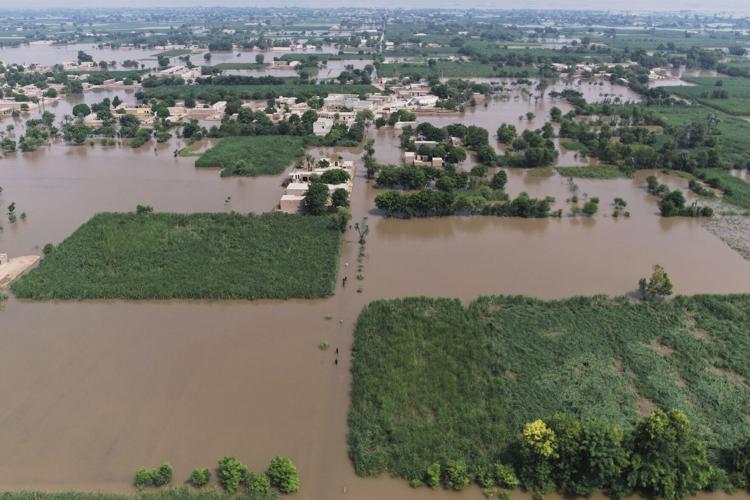
Chandigarh: As Punjab reels under the impact of its worst flood crisis in nearly five decades, the state is gradually inching toward normalcy. The devastating floods have now claimed 46 lives, displaced over 3.87 lakh residents, and caused extensive damage to land, livestock, and infrastructure. Official estimates peg the losses at over ₹14,000 crore.
The disaster has impacted nearly 2,000 villages across 14 districts, with more than 1.72 lakh hectares of farmland submerged. Crops, livestock, and homes have been destroyed, and thousands are still sheltering in temporary relief camps.
Relief and rescue operations have been intensified with the coordinated efforts of the Indian Army, NDRF, BSF, and local administrations. So far, over 22,000 people have been rescued and 219 relief camps have been set up across the state. BSF Inspector General Atul Fulzule visited flood-hit areas along the Ferozepur border to assess the situation and review relief measures.
More than 50 BSF outposts and segments of the fencing along the Indo-Pak border in Ferozepur, Amritsar, Tarn Taran, Fazilka, Gurdaspur, and Pathankot districts remain submerged, raising security concerns.
Punjab Finance Minister Harpal Singh Cheema called the floods a “catastrophe of historic proportions,” criticizing the Centre for inadequate support. The state has submitted a request to the National Disaster Relief Fund for urgent financial assistance. “We are seeking immediate relief and long-pending dues of ₹60,000 crore,” Cheema said, blaming mismanagement of dam water releases for aggravating the disaster.
Meanwhile, the Sanyukt Kisan Morcha (SKM) is set to file a petition in the Punjab and Haryana High Court seeking a judicial probe into whether the floods were entirely natural or partially man-made.
In a significant development, Prime Minister Narendra Modi is expected to visit Gurdaspur on September 9 to survey the flood-hit regions and review ongoing relief measures. His visit is being seen as a signal of stronger central engagement.
The Punjab government has ordered all schools, colleges, and educational institutions to remain shut until September 9, with inspections to be conducted to ensure structural safety before reopening.
Meanwhile, neighboring Haryana is also witnessing rising water levels. The Markanda River has breached its danger mark in Kurukshetra, prompting the closure of schools and Anganwadi centers in Shahabad and Pehowa subdivisions. In Patiala, overflows from the Markanda and Tangri rivers are causing panic, with 23 houses damaged and fields submerged.
Brief spells of sunshine between intermittent rains have offered a glimmer of hope to those still battling the aftermath. Relief workers and volunteers continue to work round the clock, and efforts are now shifting toward damage assessment and rehabilitation.
Meanwhile, Indian Air Force (IAF) has carried out a major humanitarian operation in landslide-affected regions of Jammu & Kashmir and Himachal Pradesh.
In a social media post, Western Air Command of IAF said Indian Air Force helicopters continue to provide relief operations across Punjab, Himachal and J&K, by having evacuated 541 people from Bharmor-Chamba sector and airlifting over 10,000 kg of essential relief material in Kullu and Kishtwar sectors.
It said the IAF has assets positioned for follow-up tasks, reflecting the IAF’s unwavering commitment to humanitarian assistance and disaster relief. Four helicopters and 35 crew worked day and night to make these missions a success.