

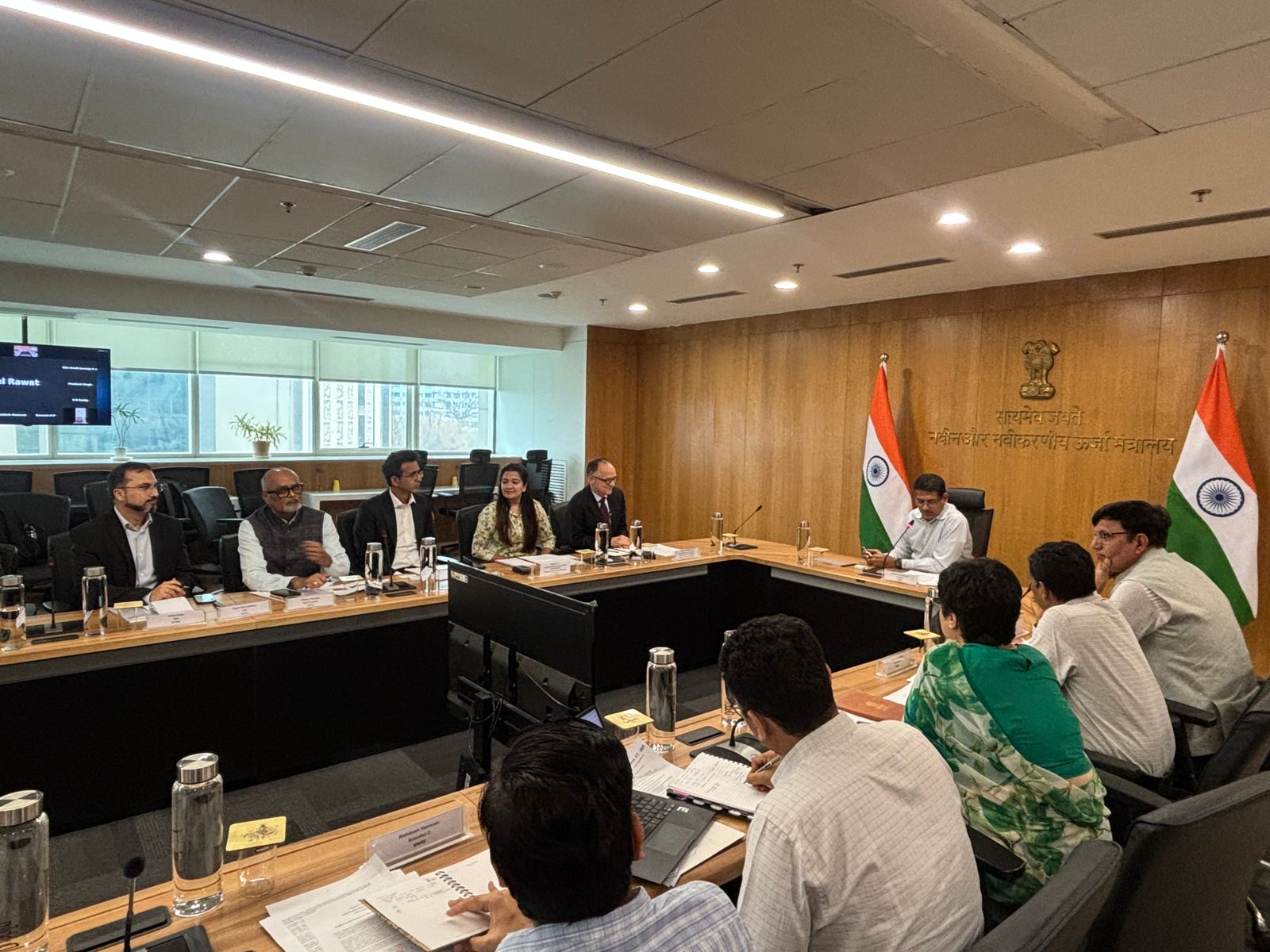
New Delhi: The Indian Wind Turbine Manufacturers Association (IWTMA) has called for stronger market-based mechanisms, advanced forecasting systems, and deeper global collaboration to ensure efficient grid integration of wind energy in India.
The recommendations were made during the Indo-German workshop on “Addressing Challenges in Grid Integration of Wind Energy,” held in New Delhi.
The workshop brought together key stakeholders, including the Ministry of New and Renewable Energy (MNRE), NITI Aayog, Central Electricity Authority (CEA), Indian Space Research Organisation (ISRO), and National Centre for Medium Range Weather Forecasting (NCMRWF), along with representatives from Gujarat, Rajasthan, and Tamil Nadu, and industry leaders from India and Germany.
Discussions focused on tackling renewable energy variability and enhancing grid resilience as India increases its share of wind and solar power. Drawing lessons from Germany’s experience, experts highlighted structured balancing systems and commercially driven approaches as scalable models for India’s evolving power sector.
A major theme of the workshop was the importance of accurate, short-term forecasting powered by data and artificial intelligence. Experts noted that improved forecasting can significantly reduce grid imbalances, optimize scheduling, and lower operational costs. Participants also emphasized the need to develop robust ancillary service markets to support higher renewable energy penetration and ensure system flexibility and stability.
Virtual Power Plants (VPPs) emerged as another key solution, enabling aggregation of distributed renewable energy resources for coordinated dispatch, especially in high-renewable scenarios.
Speaking at the event, MNRE Secretary Santosh Sarangi stressed the need to shift focus from purely expanding capacity to improving the quality and resilience of the power system.
“Most countries are now trying to tackle the grid integration challenges. We must pivot away from a purely quantitative expansion to adding qualitative elements into our power system. And in this context, addressing the issues of grid resilience and flexibility by strengthening our transmission system, by upgrading our distribution network will be essential. In addition, using modern digital tools, AI tools to have advanced forecasting and digital monitoring will also be key.”
MNRE Joint Secretary Rajesh Kulhari underscored the value of Indo-German cooperation, noting that Germany’s experience in managing high levels of renewable energy offers important lessons for India.
He pointed to balancing group frameworks, transparent market signals, and virtual power plants as promising approaches for India’s power sector reforms.
Aditya Pyasi, CEO of IWTMA, emphasized that smarter forecasting and flexible grid integration can significantly reduce investment risks in the wind energy sector.
He also called for improvements in forecasting timelines, suggesting that shortening the current 90-minute scheduling window could enhance efficiency and reliability across the renewable energy ecosystem.
“We would therefore encourage the Central Electricity Authority to explore regulatory provisions or grid codes that enable shorter forecasting windows while maintaining system stability. Greater reliance on spot markets and ancillary services will also be essential, as grid operators and market participants collectively take the next step toward integrating higher levels of renewable energy into the system”
The workshop concluded with a shared commitment to strengthening Indo-German collaboration, aligning policy and regulatory frameworks, and accelerating the adoption of advanced forecasting and market-based solutions to support India’s clean energy transition.


Boostaro is a purpose-built wellness formula created for men who want to strengthen vitality, confidence, and everyday performance.