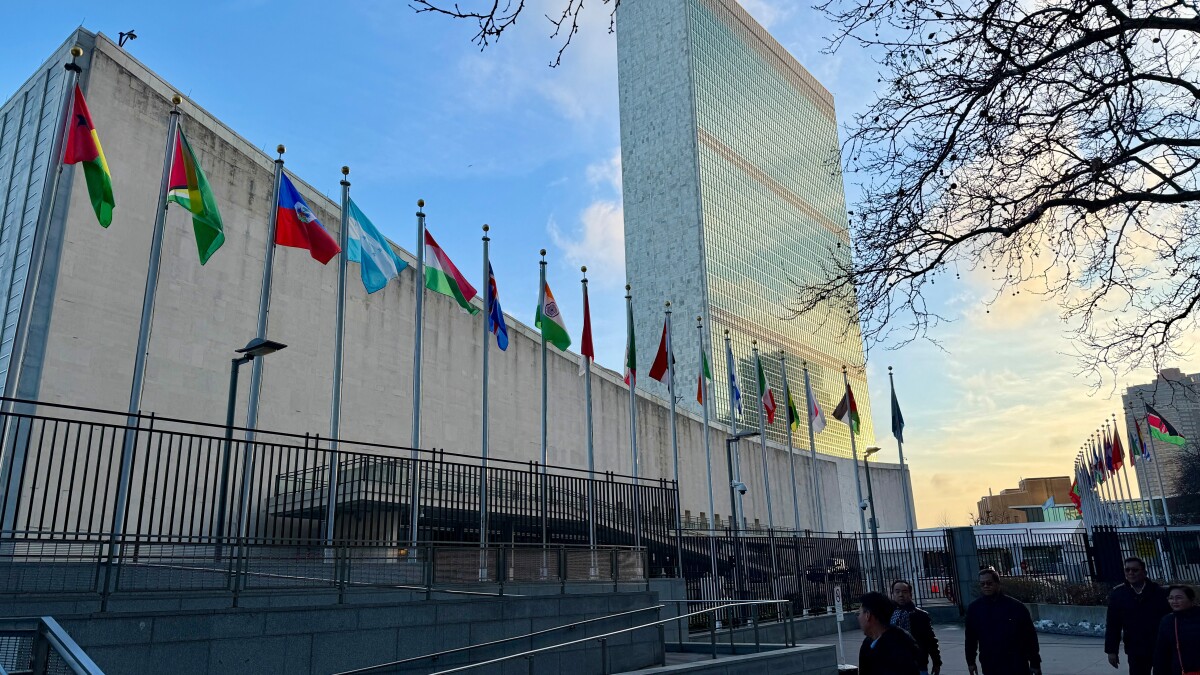
New Delhi: The United States’ decision to withdraw from major world environmental treaties, including the United Nations Framework Convention on Climate Change (UNFCCC), the foundational treaty that has governed global climate cooperation for more than three decades , marks a watershed moment in international environmental policy, with wide-ranging implications for both the U.S. and the world.
Last year, the Trump administration withdrew from the Paris Agreement. This time, he listed 35 non-U.N. groups and 31 U.N. entities.
The White House described the institutions as operating “contrary to U.S. national interests,” especially amid a policy push to expand oil, gas and mining development.
In early January 2026, the Trump administration announced that it would exit not only the UNFCCC but also the Paris Agreement framework and the Intergovernmental Panel on Climate Change (IPCC), along with dozens of other international bodies.
The UNFCCC has served as the central legal and diplomatic architecture for climate negotiations since its adoption and ratification by the U.S. Senate in 1992. It provided the framework under which nearly every major climate agreement, including the Paris Agreement, was negotiated.
Withdrawing from it effectively removes the U.S. from the formal processes that shape global targets for emissions reduction, transparency mechanisms and climate finance commitments.
Similarly, disengaging from the IPCC, the principal scientific body that assesses climate science for policymakers, distances U.S. scientists and policymakers from collaborative assessment reports that are widely seen as authoritative, potentially diminishing the influence of U.S. science on global climate discourse.
United Nations climate chief Simon Stiell described the decision as a “colossal own goal,” warning that it will leave the U.S. less secure and prosperous at a time when wildfires, droughts, floods and other climate impacts are intensifying.
“While all other nations are stepping forward together, this latest step back from global leadership, climate cooperation and science can only harm the U.S. economy, jobs and living standards, as wildfires, floods, mega-storms and droughts get rapidly worse,” Stiell said in a statement.
European leaders have characterized the move as “regrettable and profoundly damaging” to multilateral cooperation, while environmental advocates argue that retreating from global climate frameworks undermines efforts to keep temperature increases within scientifically agreed limits.
Within the United States, the decision has ignited a legal and political debate. Critics contend that withdrawal from the UNFCCC, a treaty approved by the Senate, may exceed the president’s executive authority and could require congressional approval, given the constitutional role of the legislature in treaty ratification.
Supporters of the administration’s decision frame it as a “reassertion of national sovereignty and a strategic realignment” toward domestic energy interests.
The broader implications of this shift extend beyond diplomatic relations and legal questions. By stepping away from formal climate governance structures, the U.S. risks weakening the coherence of international climate policy at a moment when coordinated action is widely regarded as essential to managing the global challenge of warming.
Observers note that climate negotiations provide not only a venue for setting emissions targets but also mechanisms for transparency, accountability and climate finance for vulnerable countries, mechanisms that may now be more difficult to sustain without U.S. engagement.
Economically, the decision could shift global leadership in clean energy and climate innovation toward other major economies that continue to prioritize climate investment. Analysts argue that, as the global market increasingly values renewable technologies and climate mitigation solutions, reduced U.S. participation in shaping those markets could have long-term competitive implications.
Conversely, domestic actors, including some state governments, corporations and civil society organizations, maintain climate initiatives independently of federal policy, suggesting a more fragmented but continued engagement with climate action inside the U.S.
At the heart of the global response is a recognition that the climate crisis transcends national borders. The withdrawal underscores how deeply politicized and contentious climate governance has become within the U.S., even as climate impacts intensify worldwide.
Whether this decision will fundamentally alter the trajectory of global climate cooperation remains to be seen, but for now it represents a moment of clear divergence between U.S. federal policy and the prevailing international consensus on collective climate action.